Together We Make Change
Together We Make Change
Together We Make Change
Overview
Overview
Overview
I designed DoGood to connect volunteers with opportunities quickly and easily. My goal was to make giving back simple, enjoyable, and impactful, turning the desire to help into real action.
I designed DoGood to connect volunteers with opportunities quickly and easily. My goal was to make giving back simple, enjoyable, and impactful, turning the desire to help into real action.
I designed DoGood to connect volunteers with opportunities quickly and easily. My goal was to make giving back simple, enjoyable, and impactful, turning the desire to help into real action.
Timeline
Timeline
Timeline
3 weeks (design sprint-based process)
3 weeks (design sprint-based process)
3 weeks (design sprint-based process)
Role
Role
Role
UX Designer - responsible for shaping the end-to-end experience through research, ideation, prototyping, and testing
UX Designer - responsible for shaping the end-to-end experience through research, ideation, prototyping, and testing
UX Designer - responsible for shaping the end-to-end experience through research, ideation, prototyping, and testing
Problems
Problems
Problems
Users struggle to find and register for suitable volunteering programs due to complex processes, leading to low motivation. Additionally, organizers face challenges in effectively managing their campaigns.
Users struggle to find and register for suitable volunteering programs due to complex processes, leading to low motivation. Additionally, organizers face challenges in effectively managing their campaigns.
Users struggle to find and register for suitable volunteering programs due to complex processes, leading to low motivation. Additionally, organizers face challenges in effectively managing their campaigns.
Purpose
Purpose
Purpose
To streamline the entire volunteering process, making it effortless for users to join events and fostering long-term engagement.
To streamline the entire volunteering process, making it effortless for users to join events and fostering long-term engagement.
To streamline the entire volunteering process, making it effortless for users to join events and fostering long-term engagement.
Background
Background
Effortless volunteering experience
Effortless volunteering experience
Effortless volunteering experience
In today’s fast-paced world, many people want to contribute to social causes but face challenges like limited time, lack of information, and difficulty accessing trusted volunteer opportunities. Finding the right volunteering activities can be confusing, time-consuming, and opaque.
DoGood bridges this gap. The app makes it easy for volunteers to discover activities that match their interests and schedules while providing a structured and trackable experience. With DoGood, everyone can make a meaningful impact in a more efficient, measurable, and enjoyable way.
In today’s fast-paced world, many people want to contribute to social causes but face challenges like limited time, lack of information, and difficulty accessing trusted volunteer opportunities. Finding the right volunteering activities can be confusing, time-consuming, and opaque.
DoGood bridges this gap. The app makes it easy for volunteers to discover activities that match their interests and schedules while providing a structured and trackable experience. With DoGood, everyone can make a meaningful impact in a more efficient, measurable, and enjoyable way.
In today’s fast-paced world, many people want to contribute to social causes but face challenges like limited time, lack of information, and difficulty accessing trusted volunteer opportunities. Finding the right volunteering activities can be confusing, time-consuming, and opaque.
DoGood bridges this gap. The app makes it easy for volunteers to discover activities that match their interests and schedules while providing a structured and trackable experience. With DoGood, everyone can make a meaningful impact in a more efficient, measurable, and enjoyable way.

Unfolding the Real Flow
Unfolding the Real Flow
Unfolding the Real Flow
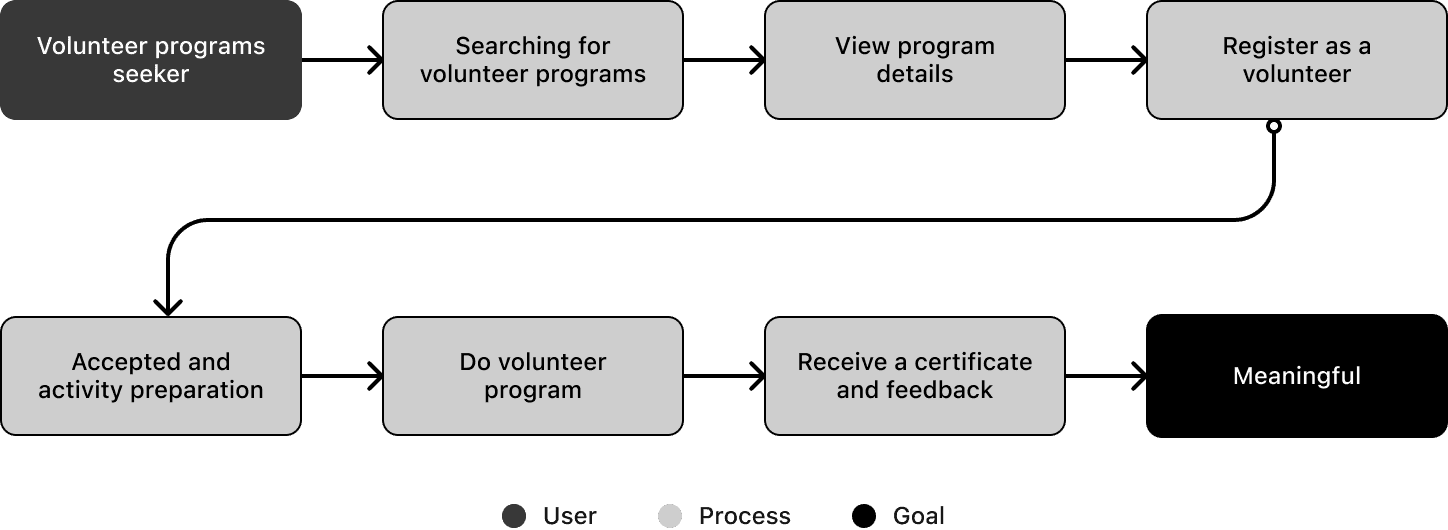
I started mapping the real process, how things actually worked, not just how they were supposed to. Step by step, I followed what users did and spotted where things got messy or confusing. From each step, I wrote down questions to dig deeper later in user interviews.
I started mapping the real process, how things actually worked, not just how they were supposed to. Step by step, I followed what users did and spotted where things got messy or confusing. From each step, I wrote down questions to dig deeper later in user interviews.
I started mapping the real process, how things actually worked, not just how they were supposed to. Step by step, I followed what users did and spotted where things got messy or confusing. From each step, I wrote down questions to dig deeper later in user interviews.
Scope and Requirements
Seeds into Change
Seeds into Change
Seeds into Change
After discussions with the users and stakeholders, the following requirements are defined for the development of DoGood:
Volunteers should be able to discover activities, register, share their experiences within the community, and view their past participation, enabling them to engage effectively and track their impact.
Volunteers must actively participate in the registration and activity sign-up process to ensure accurate data collection and commitment to the selected activities.
To use DoGood, volunteers must have a registered account to track participation, progress, and impact, ensuring transparency and accountability across the platform.
After discussions with the users and stakeholders, the following requirements are defined for the development of DoGood:
Volunteers should be able to discover activities, register, share their experiences within the community, and view their past participation, enabling them to engage effectively and track their impact.
Volunteers must actively participate in the registration and activity sign-up process to ensure accurate data collection and commitment to the selected activities.
To use DoGood, volunteers must have a registered account to track participation, progress, and impact, ensuring transparency and accountability across the platform.
After discussions with the users and stakeholders, the following requirements are defined for the development of DoGood:
Volunteers should be able to discover activities, register, share their experiences within the community, and view their past participation, enabling them to engage effectively and track their impact.
Volunteers must actively participate in the registration and activity sign-up process to ensure accurate data collection and commitment to the selected activities.
To use DoGood, volunteers must have a registered account to track participation, progress, and impact, ensuring transparency and accountability across the platform.
Identifying Agen Segmentation
The Giving Pulse
The Giving Pulse
The Giving Pulse
This persona is developed based on user research to guide the design and development of DoGood, ensuring the platform effectively meets volunteer needs and supports the growth of community engagement.
This persona is developed based on user research to guide the design and development of DoGood, ensuring the platform effectively meets volunteer needs and supports the growth of community engagement.
This persona is developed based on user research to guide the design and development of DoGood, ensuring the platform effectively meets volunteer needs and supports the growth of community engagement.
Name: Rahman
Age: 21 years
Occupation: Student
Name: Rahman
Age: 21 years
Occupation: Student
Name: Rahman
Age: 21 years
Occupation: Student
Rahman, 22, a tech-savvy university student from Jakarta who wants to contribute to social causes but has limited time due to classes and assignments.
Rahman, 22, a tech-savvy university student from Jakarta who wants to contribute to social causes but has limited time due to classes and assignments.
Rahman, 22, a tech-savvy university student from Jakarta who wants to contribute to social causes but has limited time due to classes and assignments.
Goals:
Discover volunteering opportunities that fit her schedule
Track and reflect on her contributions
Connect with peers in the volunteering community
Goals:
Discover volunteering opportunities that fit her schedule
Track and reflect on her contributions
Connect with peers in the volunteering community
Goals:
Discover volunteering opportunities that fit her schedule
Track and reflect on her contributions
Connect with peers in the volunteering community
Frustations:
Volunteer opportunities are scattered and hard to find
Registration is often confusing or time-consuming
No easy way to track past activities
Frustations:
Volunteer opportunities are scattered and hard to find
Registration is often confusing or time-consuming
No easy way to track past activities
Frustations:
Volunteer opportunities are scattered and hard to find
Registration is often confusing or time-consuming
No easy way to track past activities
Quote:
"I want to help, but I need a platform that fits my schedule and keeps me motivated."
Quote:
"I want to help, but I need a platform that fits my schedule and keeps me motivated."
Quote:
"I want to help, but I need a platform that fits my schedule and keeps me motivated."
Name: Siti Aminah
Age: 45 years
Occupation: Housewife
Name: Siti Aminah
Age: 45 years
Occupation: Housewife
Name: Siti Aminah
Age: 45 years
Occupation: Housewife
Siti, 45, a mother who wants to contribute to her community and involve her family in social activities. She has limited mobility and time due to household responsibilities but is motivated to make a positive impact locally.
Siti, 45, a mother who wants to contribute to her community and involve her family in social activities. She has limited mobility and time due to household responsibilities but is motivated to make a positive impact locally.
Siti, 45, a mother who wants to contribute to her community and involve her family in social activities. She has limited mobility and time due to household responsibilities but is motivated to make a positive impact locally.
Goals:
Participate in local, family-friendly volunteering
Track personal and family contributions
Share experiences with the community
Goals:
Participate in local, family-friendly volunteering
Track personal and family contributions
Share experiences with the community
Goals:
Participate in local, family-friendly volunteering
Track personal and family contributions
Share experiences with the community
Frustations:
Volunteer opportunities are often far or not flexible.
Lack of guidance for first-time volunteers.
Difficult to balance family responsibilities with volunteering.
Frustations:
Volunteer opportunities are often far or not flexible.
Lack of guidance for first-time volunteers.
Difficult to balance family responsibilities with volunteering.
Frustations:
Volunteer opportunities are often far or not flexible.
Lack of guidance for first-time volunteers.
Difficult to balance family responsibilities with volunteering.
Quote:
"I want to contribute to my community, even with my busy schedule and family responsibilities."
Quote:
"I want to contribute to my community, even with my busy schedule and family responsibilities."
Quote:
"I want to contribute to my community, even with my busy schedule and family responsibilities."
Friction Blocking Impact
Friction Blocking Impact
Friction Blocking Impact
Hypothesis
Hypothesis
Hypothesis
Volunteering is one of the most meaningful ways to contribute to the community, yet many people struggle to find programs that match their interests and schedules, and the registration process is often confusing and time-consuming. If volunteers can effortlessly discover suitable programs, sign up quickly, and track their participation, they are more likely to stay engaged, while organizers can manage campaigns smoothly and focus on creating impactful experiences.
Volunteering is one of the most meaningful ways to contribute to the community, yet many people struggle to find programs that match their interests and schedules, and the registration process is often confusing and time-consuming. If volunteers can effortlessly discover suitable programs, sign up quickly, and track their participation, they are more likely to stay engaged, while organizers can manage campaigns smoothly and focus on creating impactful experiences.
Volunteering is one of the most meaningful ways to contribute to the community, yet many people struggle to find programs that match their interests and schedules, and the registration process is often confusing and time-consuming. If volunteers can effortlessly discover suitable programs, sign up quickly, and track their participation, they are more likely to stay engaged, while organizers can manage campaigns smoothly and focus on creating impactful experiences.
Ideate
Exploring What’s Possible
Exploring What’s Possible
Exploring What’s Possible
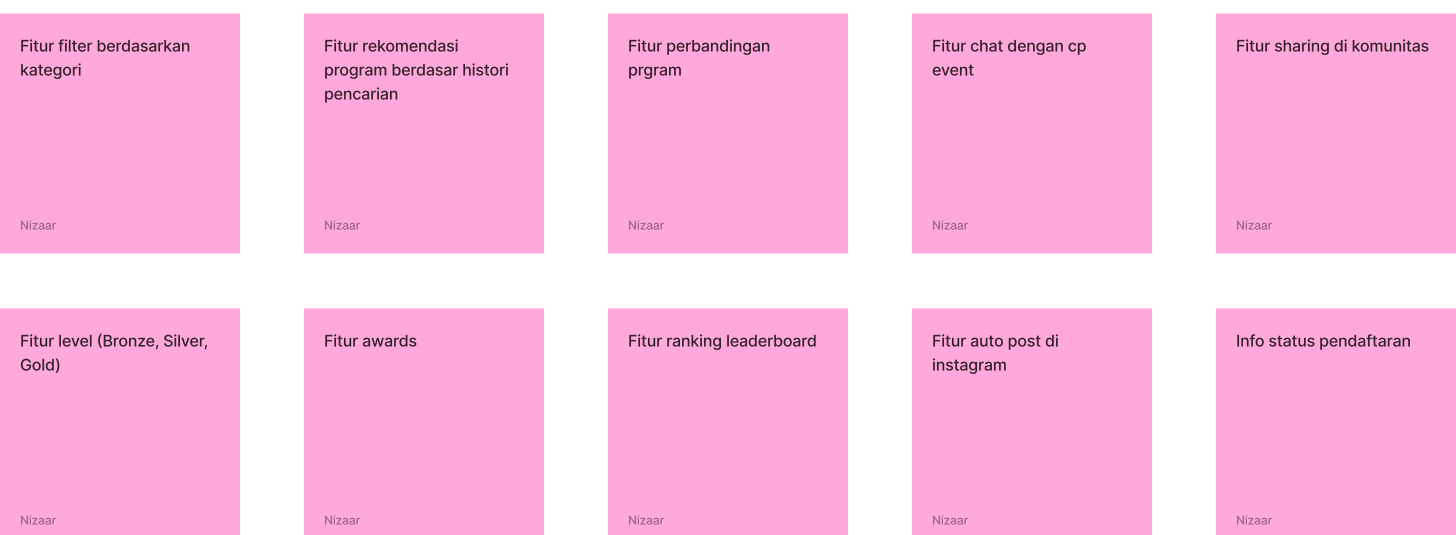
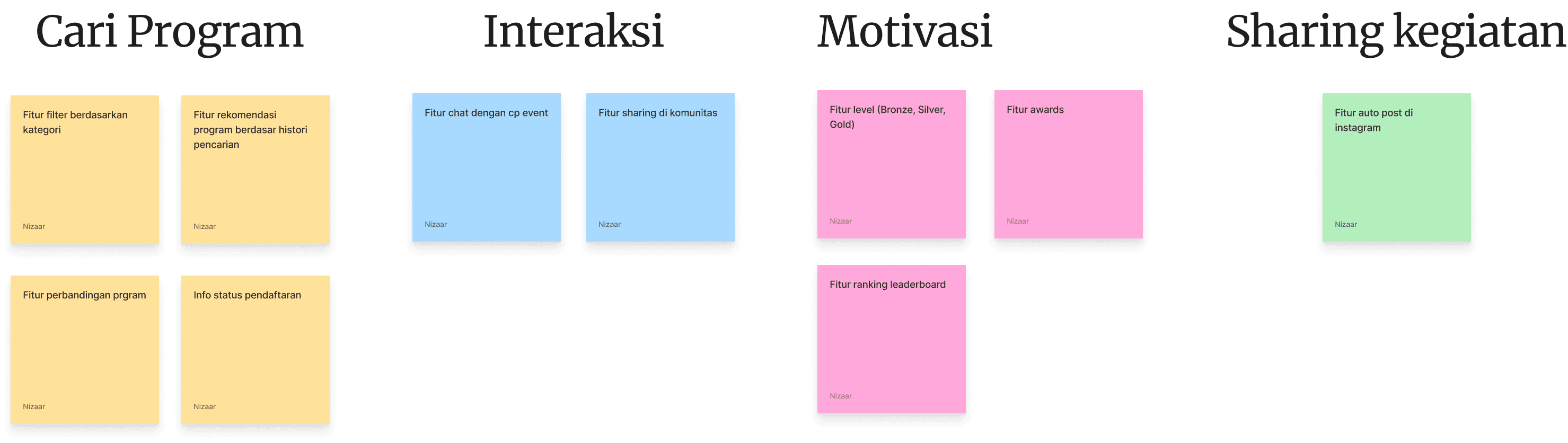
Based on the hypothesis, I sketched out 10 different solution ideas. Some were simple improvements, some were new features, and some were more experimental. But every idea came from the same place: understanding what users were really struggling with and imagining how things could feel if the friction was gone.
Based on the hypothesis, I sketched out 10 different solution ideas. Some were simple improvements, some were new features, and some were more experimental. But every idea came from the same place: Understanding what users were really struggling with and imagining how things could feel if the friction was gone.
Based on the hypothesis, I sketched out 10 different solution ideas. Some were simple improvements, some were new features, and some were more experimental. But every idea came from the same place: understanding what users were really struggling with and imagining how things could feel if the friction was gone.
Making Sense of It All
Making Sense of It All
Making Sense of It All
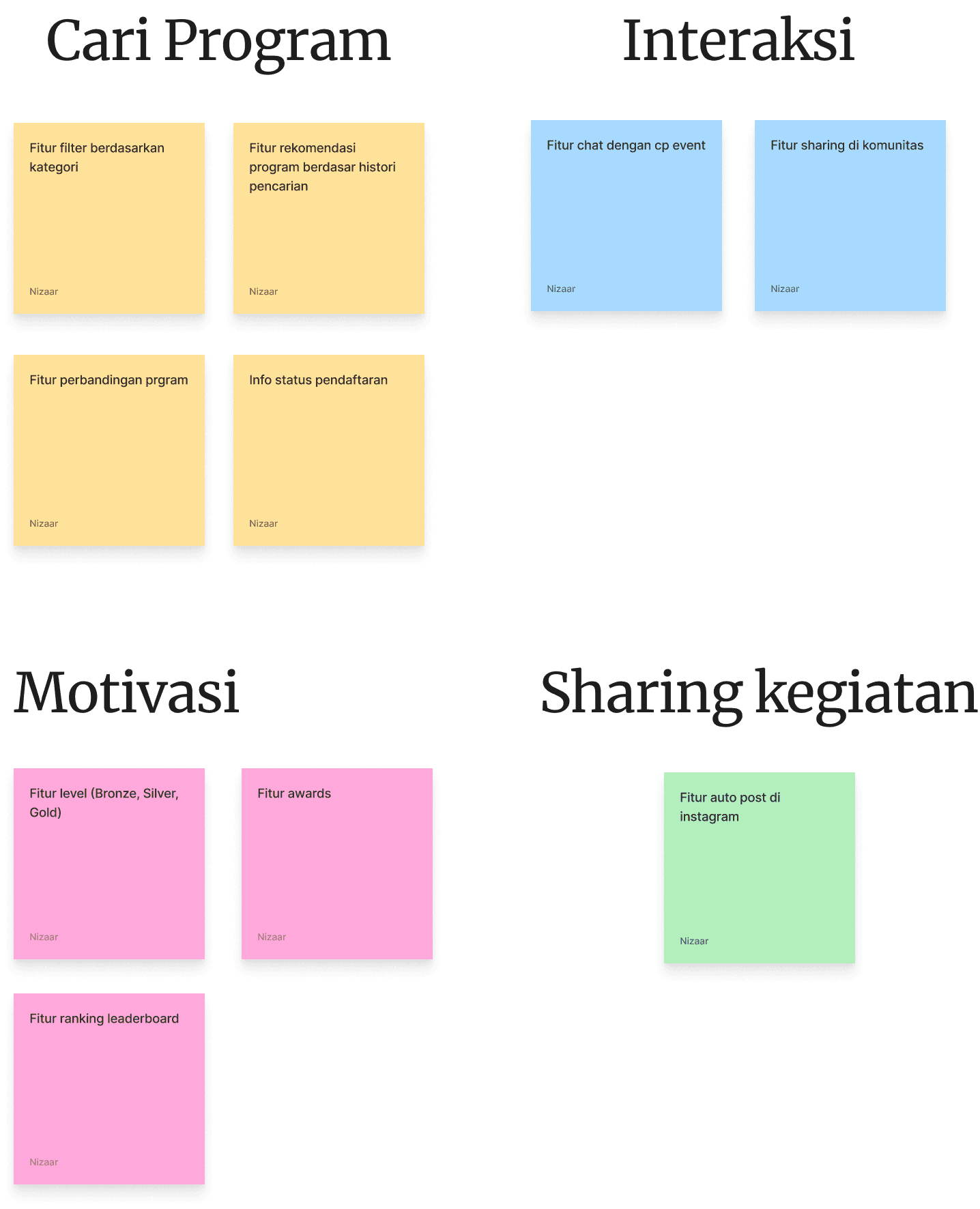
Once I had all ten ideas, I grouped them to see which ones connected with each other.
Clustering them this way made the patterns clearer — which ideas solved similar pains, and which ones stood out as stronger directions.
Once I had all ten ideas, I grouped them to see which ones connected with each other. Clustering them this way made the patterns clearer — which ideas solved similar pains, and which ones stood out as stronger directions.
Once I had all ten ideas, I grouped them to see which ones connected with each other.
Clustering them this way made the patterns clearer — which ideas solved similar pains, and which ones stood out as stronger directions.
Choosing What Matters
Choosing What Matters
Choosing What Matters
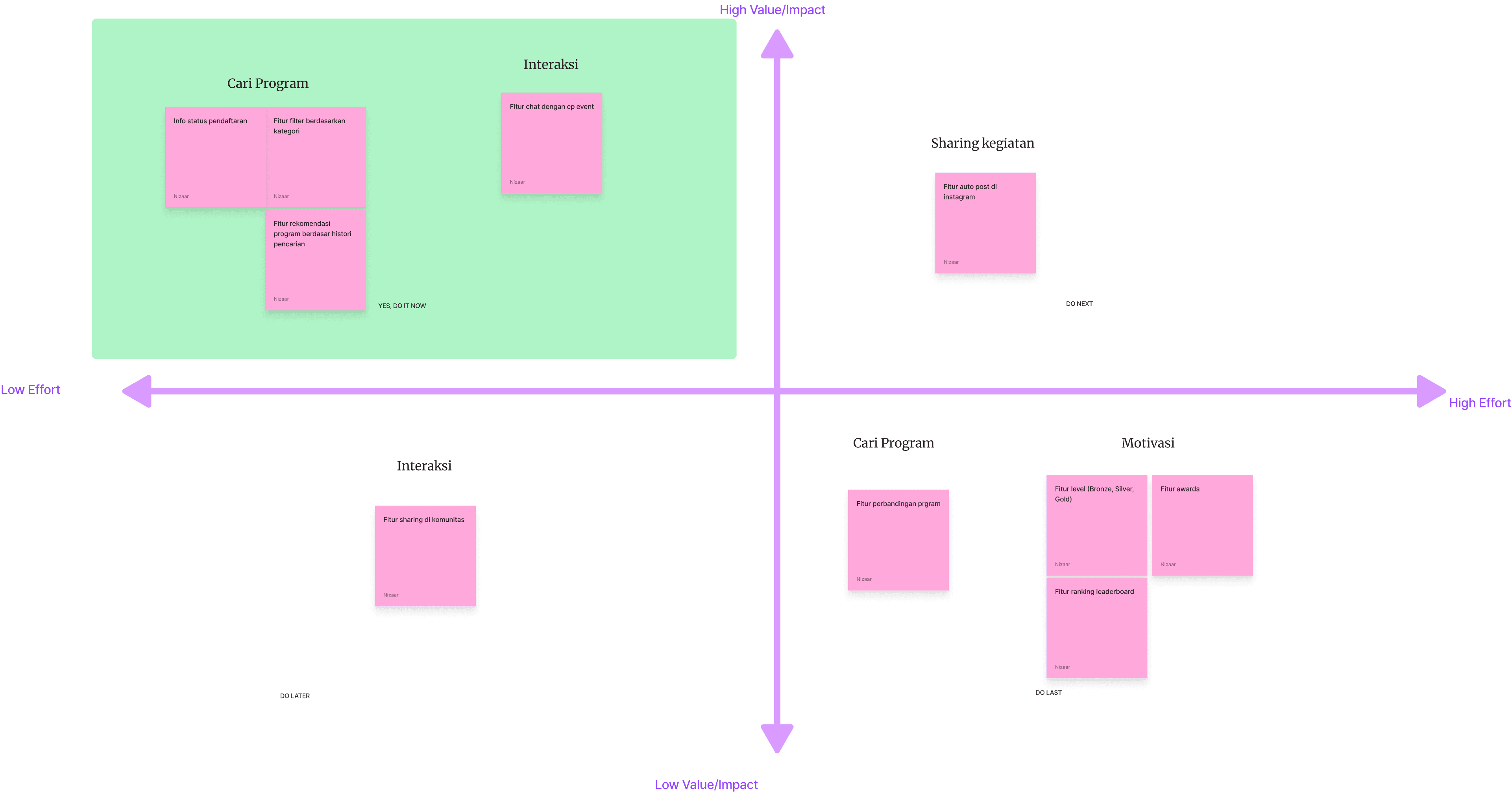
Next came the prioritization part.
I compared each idea based on how helpful it would be for users and how realistic it was to build, and from there the strongest options naturally stood out.
Next came the prioritization part.
I compared each idea based on how helpful it would be for users and how realistic it was to build, and from there the strongest options naturally stood out.
Next came the prioritization part.
I compared each idea based on how helpful it would be for users and how realistic it was to build, and from there the strongest options naturally stood out.
User Flow
Clearer Horizons
Clearer Horizons
Clearer Horizons
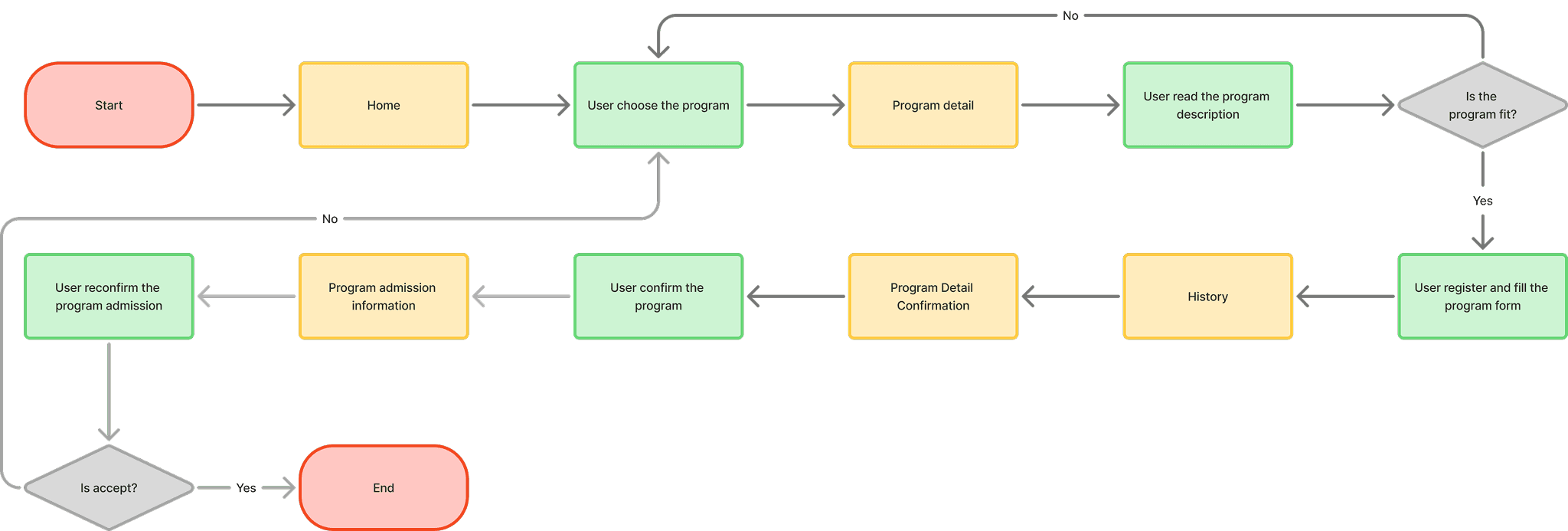
Before starting the design, I created a user flow to show how users move through the system. This helps spot confusing steps and guides the design toward a simpler, more intuitive experience.
Before starting the design, I created a user flow to show how users move through the system. This helps spot confusing steps and guides the design toward a simpler, more intuitive experience.
Before starting the design, I created a user flow to show how users move through the system. This helps spot confusing steps and guides the design toward a simpler, more intuitive experience.
Design Process
Building from Clarity
Building from Clarity
Building from Clarity
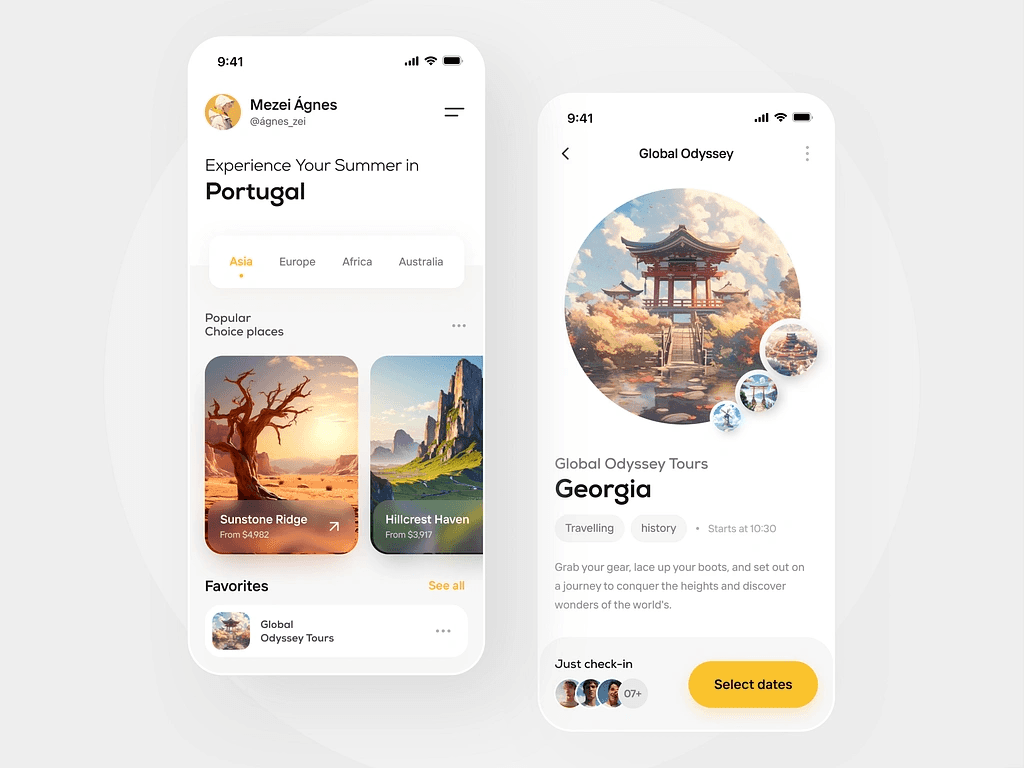
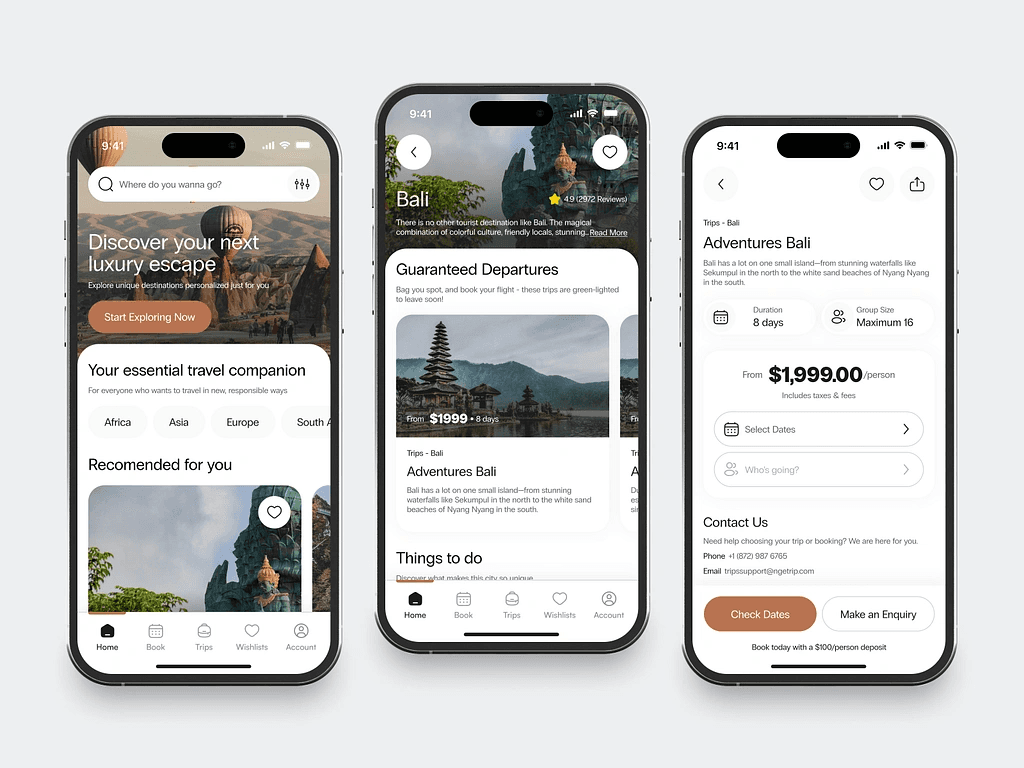
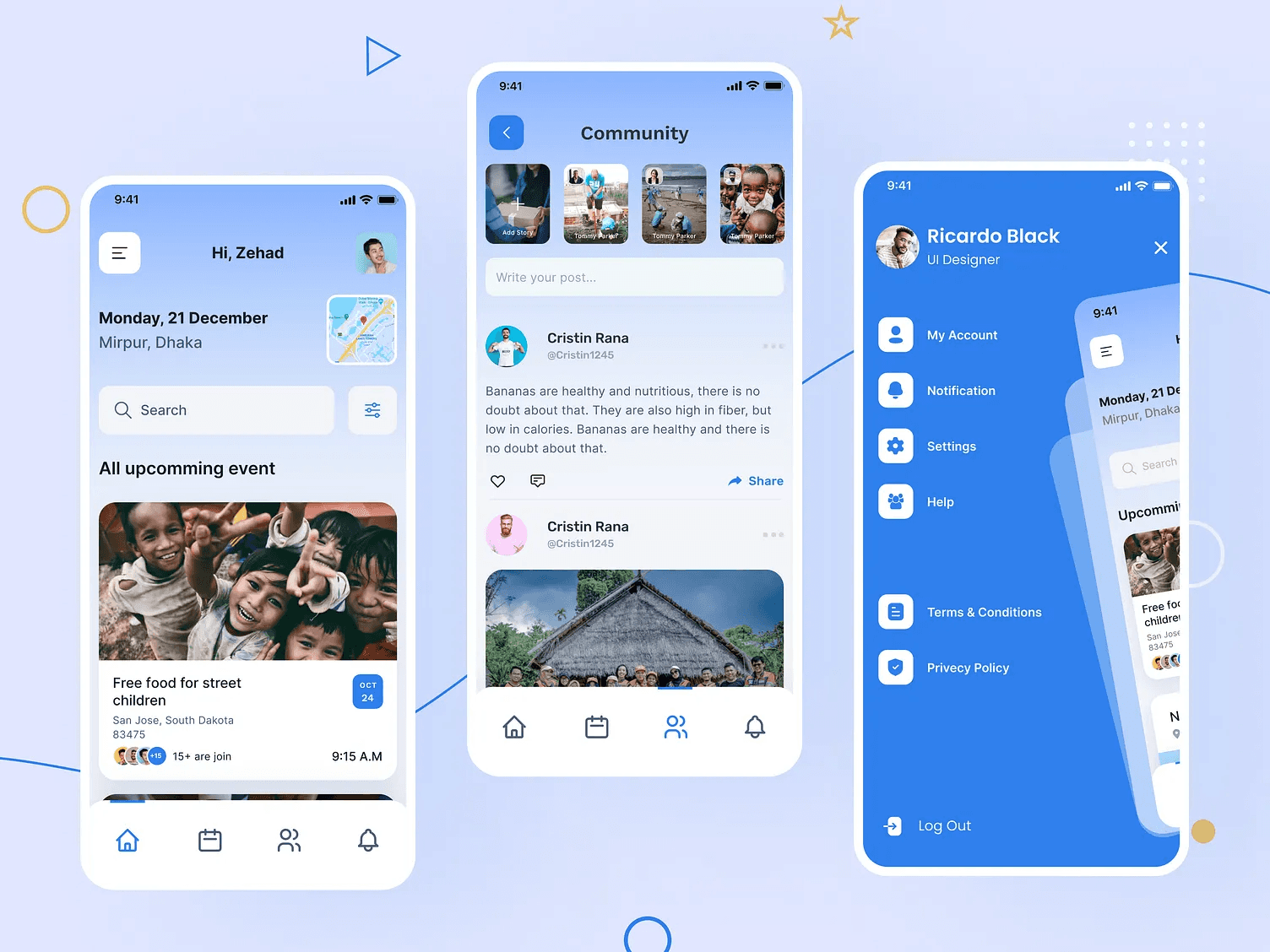
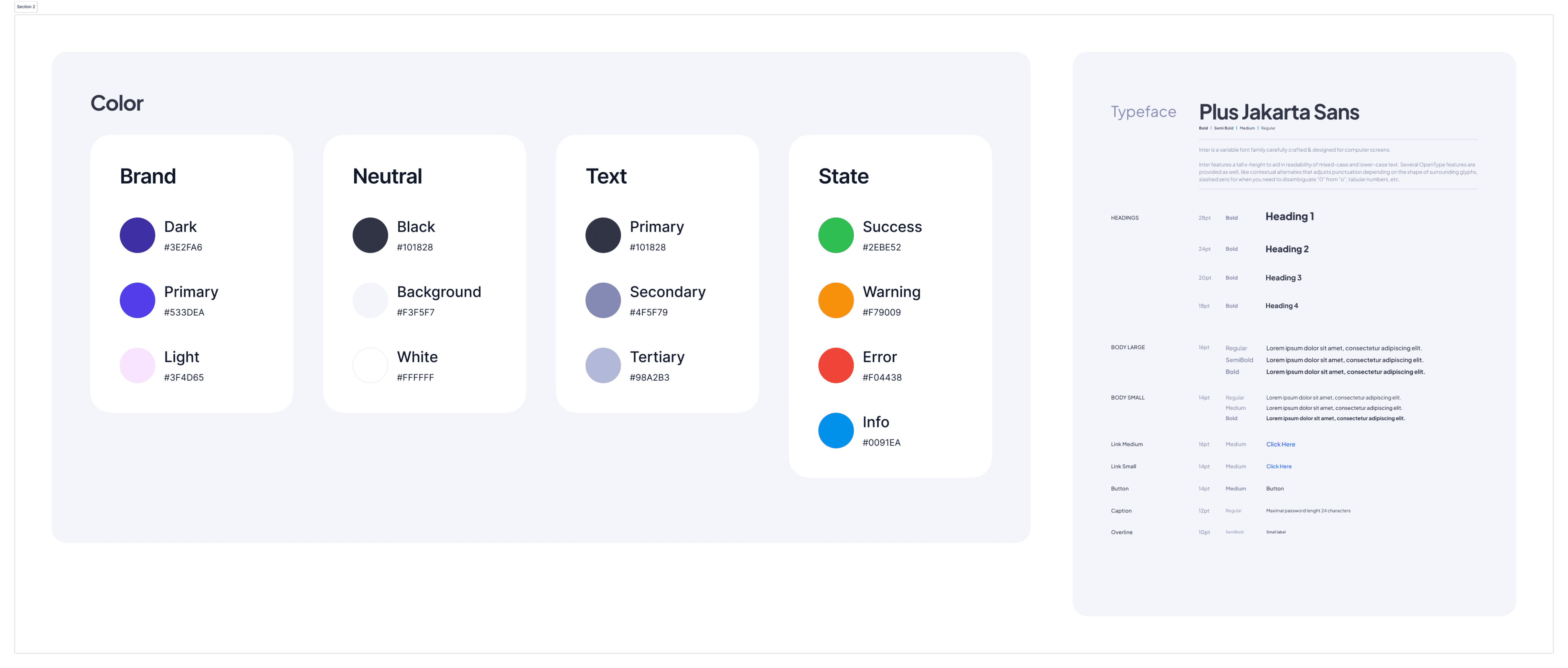
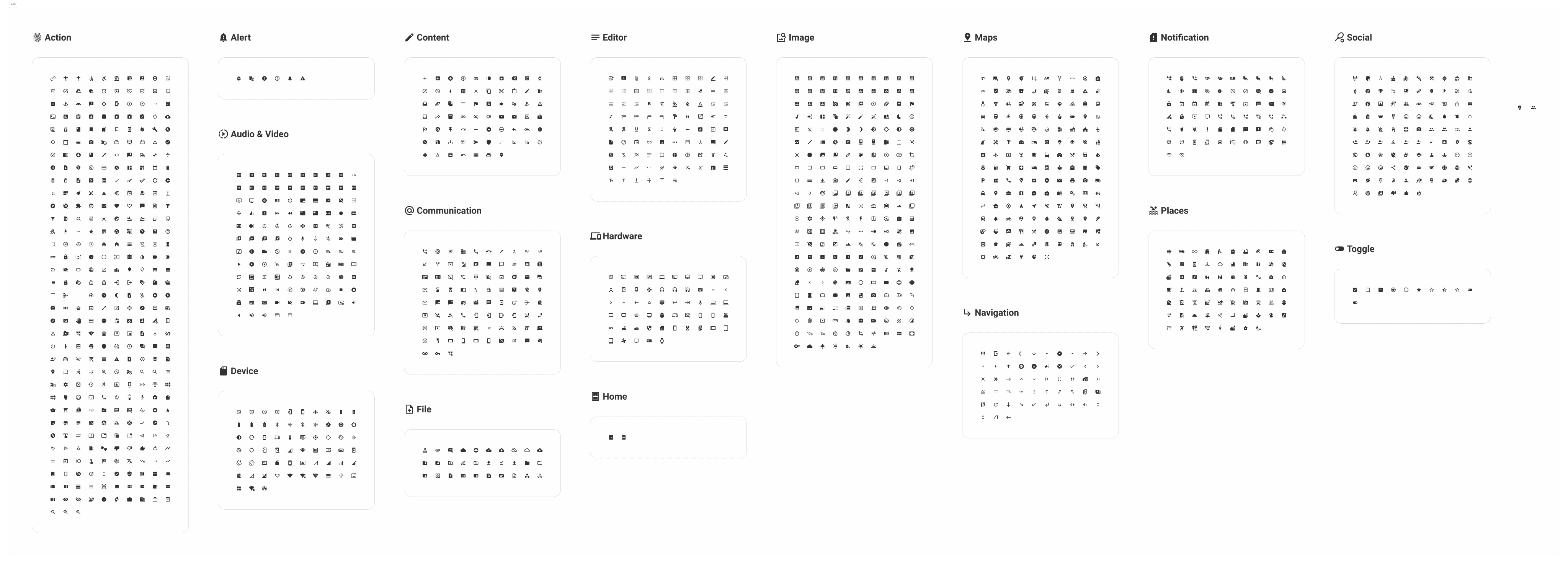
I began by exploring visuals that felt warm and community-driven, then built a simple design system with clear colors, typography, and components. That foundation made the redesign more focused and consistent.
I began by exploring visuals that felt warm and community-driven, then built a simple design system with clear colors, typography, and components. That foundation made the redesign more focused and consistent.
I began by exploring visuals that felt warm and community-driven, then built a simple design system with clear colors, typography, and components. That foundation made the redesign more focused and consistent.
References
Design System
From Lines to Logic
From Lines to Logic
From Lines to Logic
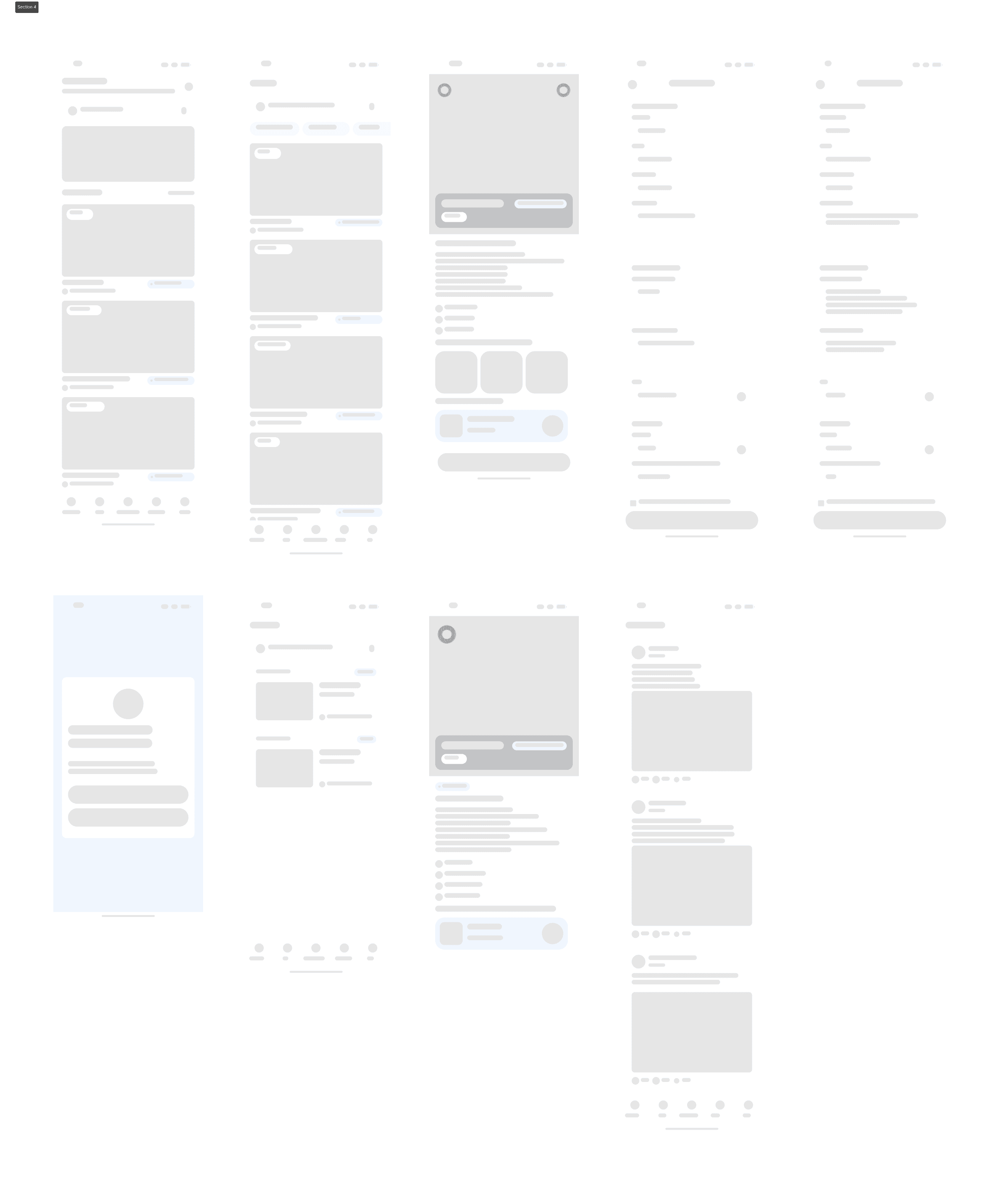
Then, I created wireframes to explore structure and user flow. It helped me focus on usability first — ensuring every action felt intuitive before moving to visuals.
Then, I created wireframes to explore structure and user flow. It helped me focus on usability first — ensuring every action felt intuitive before moving to visuals.
Then, I created wireframes to explore structure and user flow. It helped me focus on usability first — ensuring every action felt intuitive before moving to visuals.
Frame Iphone 16: 393x852px
Frame Iphone 16: 393x852px
Frame Iphone 16: 393x852px
Bringing the Concept to Life
Bringing the Concept to Life
Bringing the Concept to Life
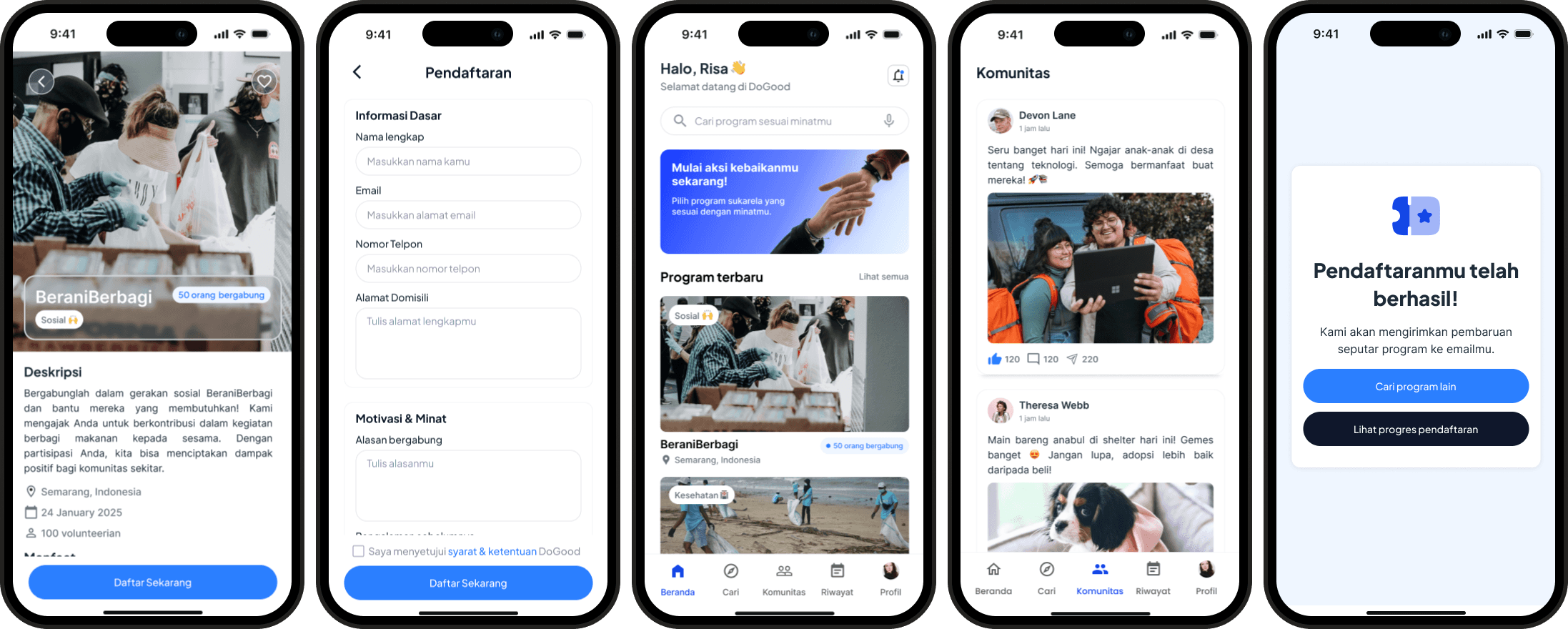

A full preview of the final colorful design screens, grouped by flow for easier storytelling. You can also explore the interactive prototype using the link below.
A full preview of the final colorful design screens, grouped by flow for easier storytelling. You can also explore the interactive prototype using the link below.
A full preview of the final colorful design screens, grouped by flow for easier storytelling. You can also explore the interactive prototype using the link below.
Usability Testing
Setting the Stage
Setting the Stage
Setting the Stage
I set a simple plan for my 1-on-1 interviews. I pictured the kind of people who actually look for volunteer programs and shaped the conversation around them.
I set a simple plan for my 1-on-1 interviews. I pictured the kind of people who actually look for volunteer programs and shaped the conversation around them.
I set a simple plan for my 1-on-1 interviews. I pictured the kind of people who actually look for volunteer programs and shaped the conversation around them.
Task Questions
Task Questions
Task Questions
Any issues during registration?
Any issues during registration?
Is each content easy to understand?
Is each content easy to understand?
Rate this task (1-5).
Rate this task (1-5).
Post-Task Evaluation
Post-Task Evaluation
Post-Task Evaluation
Rate usefulness, ease, and satisfaction
Rate usefulness, ease, and satisfaction
Single Ease Question (SEQ)
Single Ease Question (SEQ)
Close & thank the respondet
Close & thank the respondet
Access the record here: Record Data User Research
Access the record here: Record Data User Research
Profile Match
Profile Match
Profile Match
Ages: 18 - 50
Ages: 18 - 50
Have joined or are interested in joining volunteer programs
Have joined or are interested in joining volunteer programs
Use a smartphone regularly and are comfortable with mobile apps
Use a smartphone regularly and are comfortable with mobile apps
Research Objective
Research Objective
Research Objective
Understand user's habits when searching for volunteer programs
Understand user's habits when searching for volunteer programs
Have joined or are interested in joining volunteer programs
Have joined or are interested in joining volunteer programs
Evaluate how easy it is to use DoGood to find and register for programs
Evaluate how easy it is to use DoGood to find and register for programs
Discover any friction or confusion during the experience
Discover any friction or confusion during the experience
Gather feedback to improve the overall flow and usability
Gather feedback to improve the overall flow and usability
Let's Talk About Real Users
Let's Talk About Real Users
Let's Talk About Real Users
I ran a moderated usability test to evaluate how users interact with the core flows. The objective was to identify friction points, measure task completion performance, and uncover behavioral patterns that explain drop-offs.
I ran a moderated usability test to evaluate how users interact with the core flows. The objective was to identify friction points, measure task completion performance, and uncover behavioral patterns that explain drop-offs.
I ran a moderated usability test to evaluate how users interact with the core flows. The objective was to identify friction points, measure task completion performance, and uncover behavioral patterns that explain drop-offs.
Key Takeaways
Key Takeaways
Key Takeaways
Rate usefulness, ease, and satisfaction
Rate usefulness, ease, and satisfaction
Rate usefulness, ease, and satisfaction
Every participant completed both registration and status checking without major issues. The core flow works.
Every participant completed both registration and status checking without major issues. The core flow works.
Every participant completed both registration and status checking without major issues. The core flow works.
High Ease Scores Across the Board
High Ease Scores Across the Board
High Ease Scores Across the Board
Average SEQ score of 6.3/7 means the interface feels intuitive and natural to use. People didn't struggle.
Average SEQ score of 6.3/7 means the interface feels intuitive and natural to use. People didn't struggle.
Average SEQ score of 6.3/7 means the interface feels intuitive and natural to use. People didn't struggle.
Minimal Friction Points
Minimal Friction Points
Minimal Friction Points
Only one minor error across six tasks. The design doesn't get in people's way—exactly what we want.
Only one minor error across six tasks. The design doesn't get in people's way—exactly what we want.
Only one minor error across six tasks. The design doesn't get in people's way—exactly what we want.
Diverse Motivations, Same Outcome
Diverse Motivations, Same Outcome
Diverse Motivations, Same Outcome
From exchange programs to social impact, different motivations didn't affect usability. The design accommodates various user goals.
From exchange programs to social impact, different motivations didn't affect usability. The design accommodates various user goals.
From exchange programs to social impact, different motivations didn't affect usability. The design accommodates various user goals.
By the Numbers
By the Numbers
By the Numbers
100%
100%
100%
Task Success Rate
Task Success Rate
Task Success Rate
6.3
6.3
6.3
Average Ease Score
Average Ease Score
Average Ease Score
3
3
3
Happy Participants
Happy Participants
Happy Participants
Want the Full Picture?
Want the Full Picture?
Want the Full Picture?
I documented everything on Maze—all the clicks, hesitations, and "aha!" moments. If you're curious about the detailed metrics and user flows, check it out.
I documented everything on Maze—all the clicks, hesitations, and "aha!" moments. If you're curious about the detailed metrics and user flows, check it out.
I documented everything on Maze—all the clicks, hesitations, and "aha!" moments. If you're curious about the detailed metrics and user flows, check it out.
Iteration
What I Changed
What I Changed
What I Changed
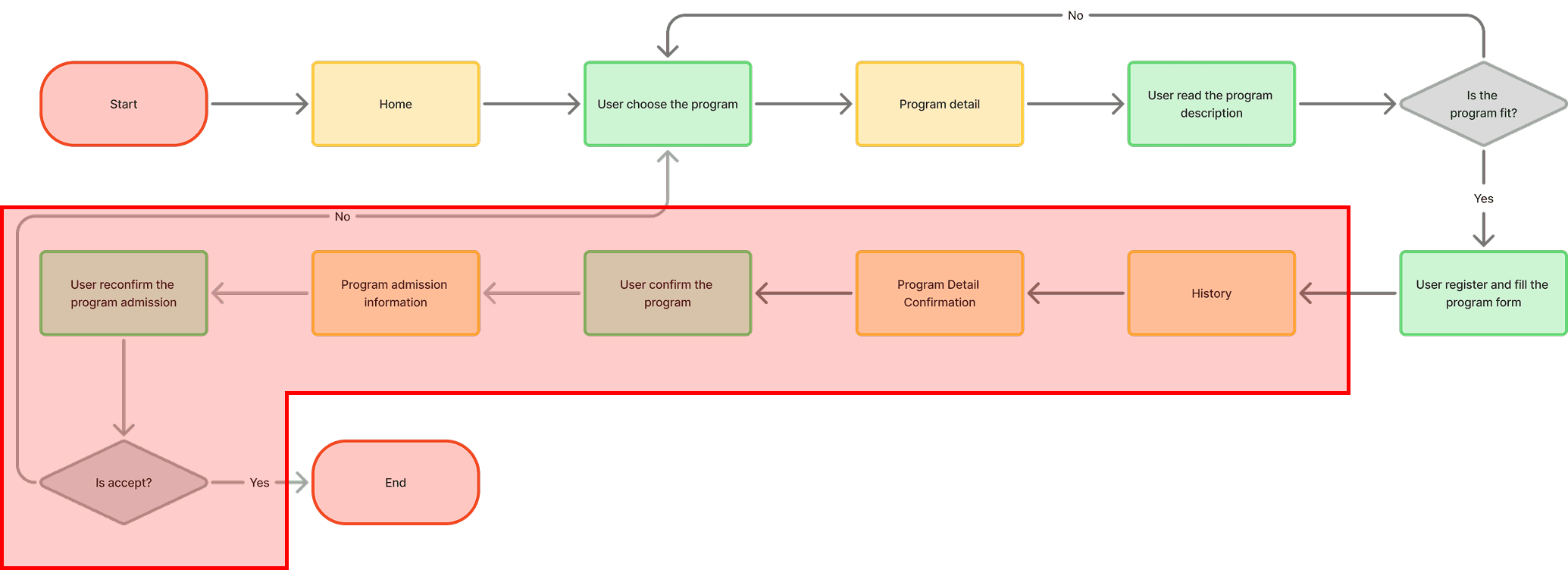
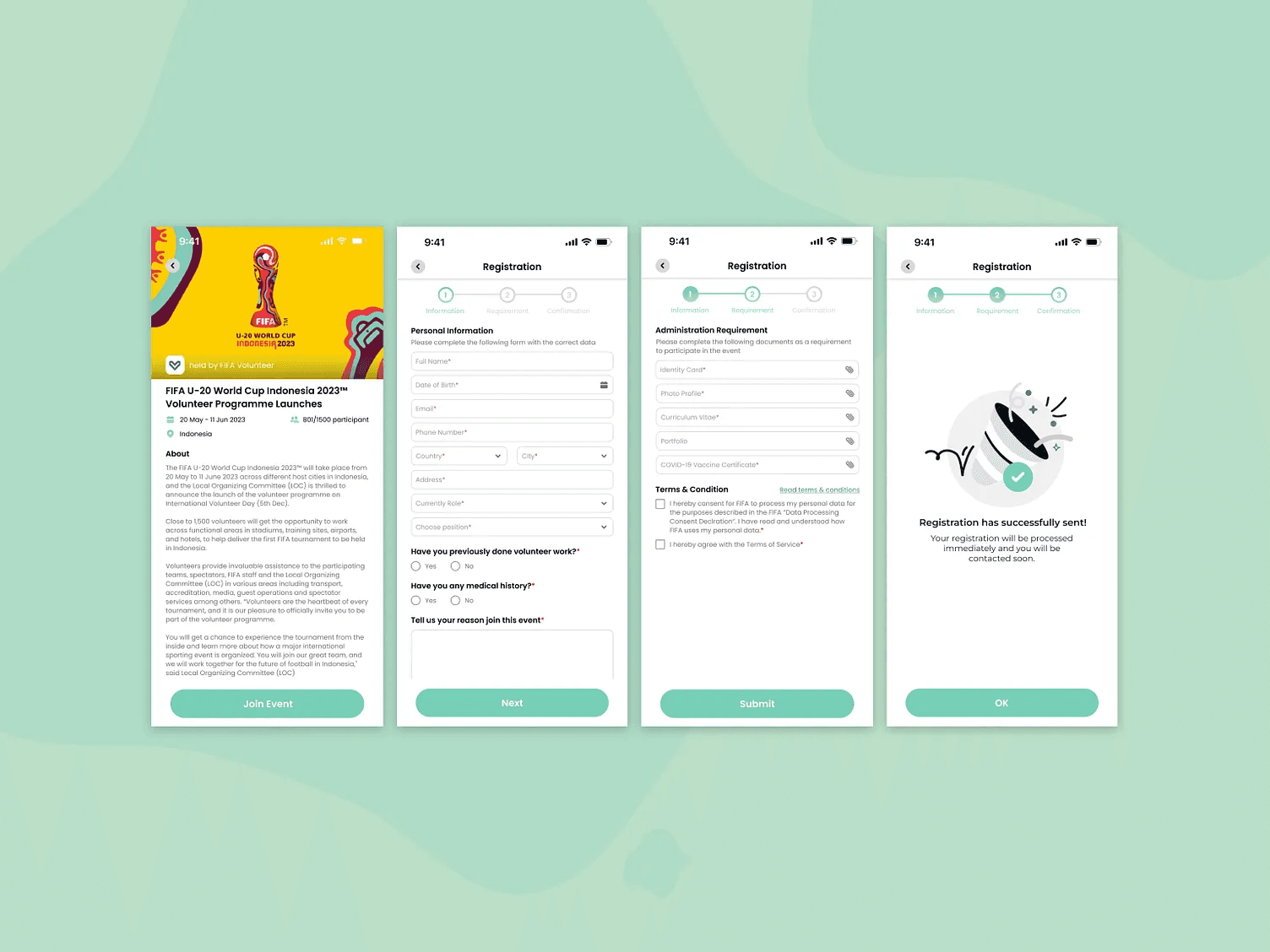
Based on usability testing insights, I discovered that users often looped back and repeated steps in the registration flow, causing confusion and delays. To address this, I analyzed the existing flow, identified unnecessary steps, and simplified the sequence.
Based on usability testing insights, I discovered that users often looped back and repeated steps in the registration flow, causing confusion and delays. To address this, I analyzed the existing flow, identified unnecessary steps, and simplified the sequence.
Based on usability testing insights, I discovered that users often looped back and repeated steps in the registration flow, causing confusion and delays. To address this, I analyzed the existing flow, identified unnecessary steps, and simplified the sequence.
Simplifying the Journey for Users
Simplifying the Journey for Users
Simplifying the Journey for Users
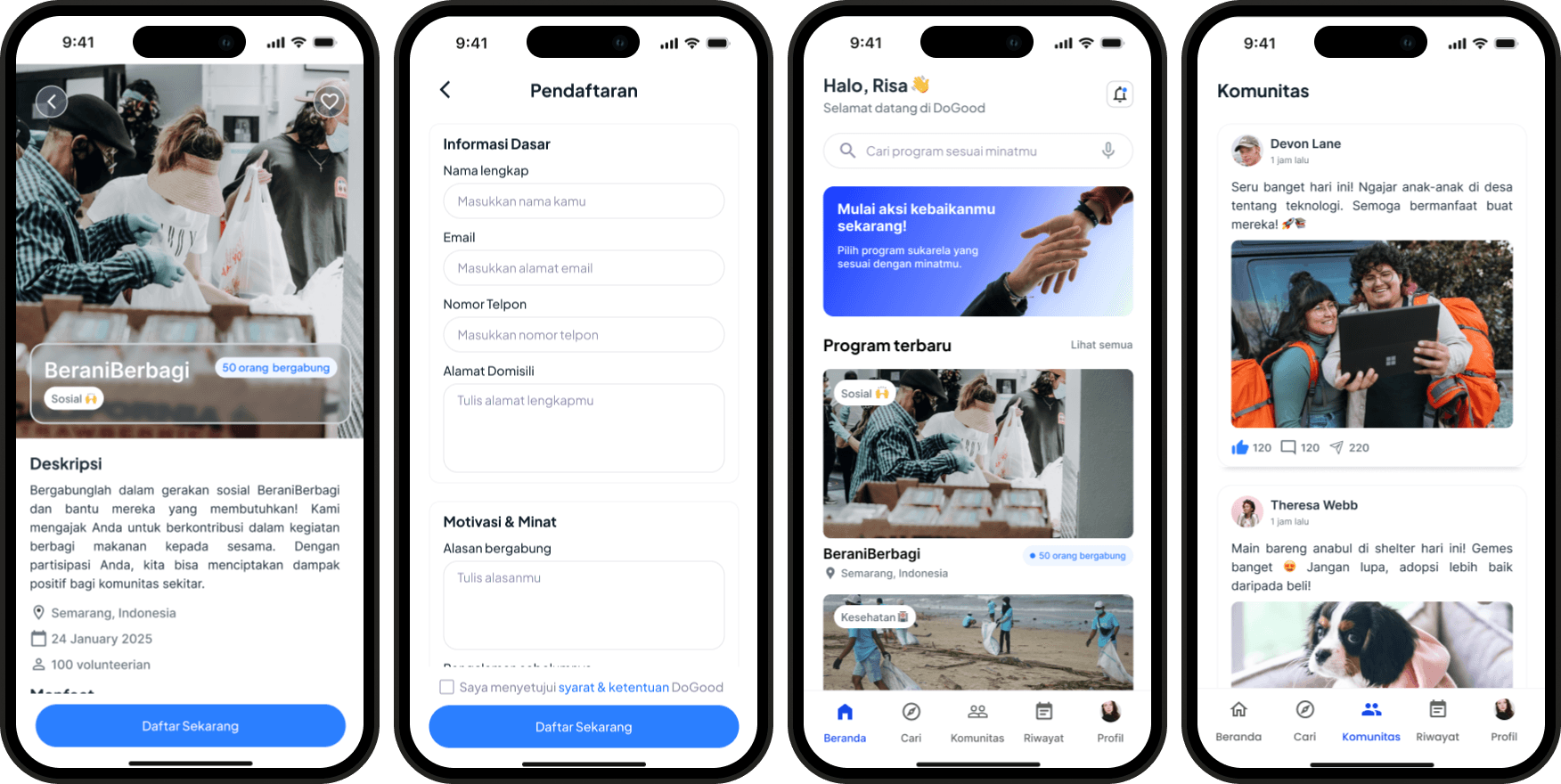
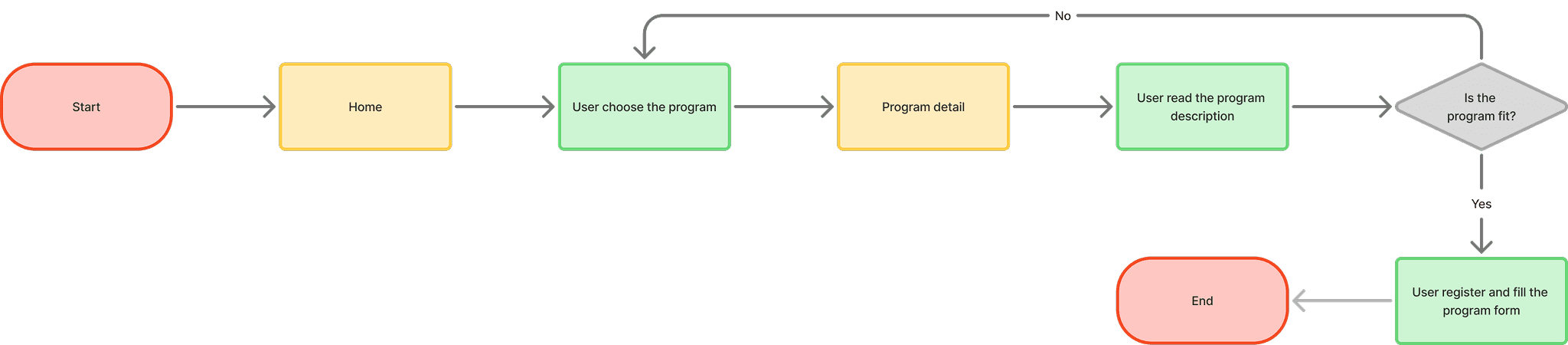
The result is a clearer, linear path with a strong hierarchy that guides users smoothly from start to finish. This refined flow reduces friction, keeps users on track, and lays the foundation for a more intuitive design experience.
The result is a clearer, linear path with a strong hierarchy that guides users smoothly from start to finish. This refined flow reduces friction, keeps users on track, and lays the foundation for a more intuitive design experience.
The result is a clearer, linear path with a strong hierarchy that guides users smoothly from start to finish. This refined flow reduces friction, keeps users on track, and lays the foundation for a more intuitive design experience.
Smoother Experience
Smoother Experience
Smoother Experience
This final design simplifies the journey and keeps users on track. The experience feels smoother, more intuitive, and easier to follow, reflecting the insights gained from real user interactions.
This final design simplifies the journey and keeps users on track. The experience feels smoother, more intuitive, and easier to follow, reflecting the insights gained from real user interactions.
This final design simplifies the journey and keeps users on track. The experience feels smoother, more intuitive, and easier to follow, reflecting the insights gained from real user interactions.

What I've Done
What I've Done
What I've Done
Conducted usability testing to find pain points.
Simplified and linearized the registration flow.
Created wireframes and interactive prototypes.
Added visual hierarchy to guide users efficiently.
Conducted usability testing to find pain points.
Simplified and linearized the registration flow.
Created wireframes and interactive prototypes.
Added visual hierarchy to guide users efficiently.
Conducted usability testing to find pain points.
Simplified and linearized the registration flow.
Created wireframes and interactive prototypes.
Added visual hierarchy to guide users efficiently.
What I Learned
What I Learned
What I Learned
Through this project, I gained practical insights from observing how real users interact with the system, and I learned what truly makes a flow intuitive and engaging.
Through this project, I gained practical insights from observing how real users interact with the system, and I learned what truly makes a flow intuitive and engaging.
Through this project, I gained practical insights from observing how real users interact with the system, and I learned what truly makes a flow intuitive and engaging.
Small friction points can disrupt the entire user experience and lead to repeated actions.
A clear, linear flow with strong visual hierarchy makes tasks easier and more satisfying.
Iterative design informed by real user insights is more effective than designing based on assumptions.
Aligning design decisions with stakeholders ensures solutions are both user-centered and feasible.
Small friction points can disrupt the entire user experience and lead to repeated actions.
A clear, linear flow with strong visual hierarchy makes tasks easier and more satisfying.
Iterative design informed by real user insights is more effective than designing based on assumptions.
Aligning design decisions with stakeholders ensures solutions are both user-centered and feasible.
Small friction points can disrupt the entire user experience and lead to repeated actions.
A clear, linear flow with strong visual hierarchy makes tasks easier and more satisfying.
Iterative design informed by real user insights is more effective than designing based on assumptions.
Aligning design decisions with stakeholders ensures solutions are both user-centered and feasible.
Next Project
Next Project
Next Project

@ 2025 All rights reserved
@ 2025 All rights reserved