Webfield — Designing Field Operations for Modern Logistics
Designed a scan-failure fallback across four modules to keep warehouse shipment validation fast and accurate under real-world conditions.
Role
Product Designer, end-to-end from workflow mapping to system architecture
Industry
Logistics & Supply Chain
Type
Concept Project
Year
2026
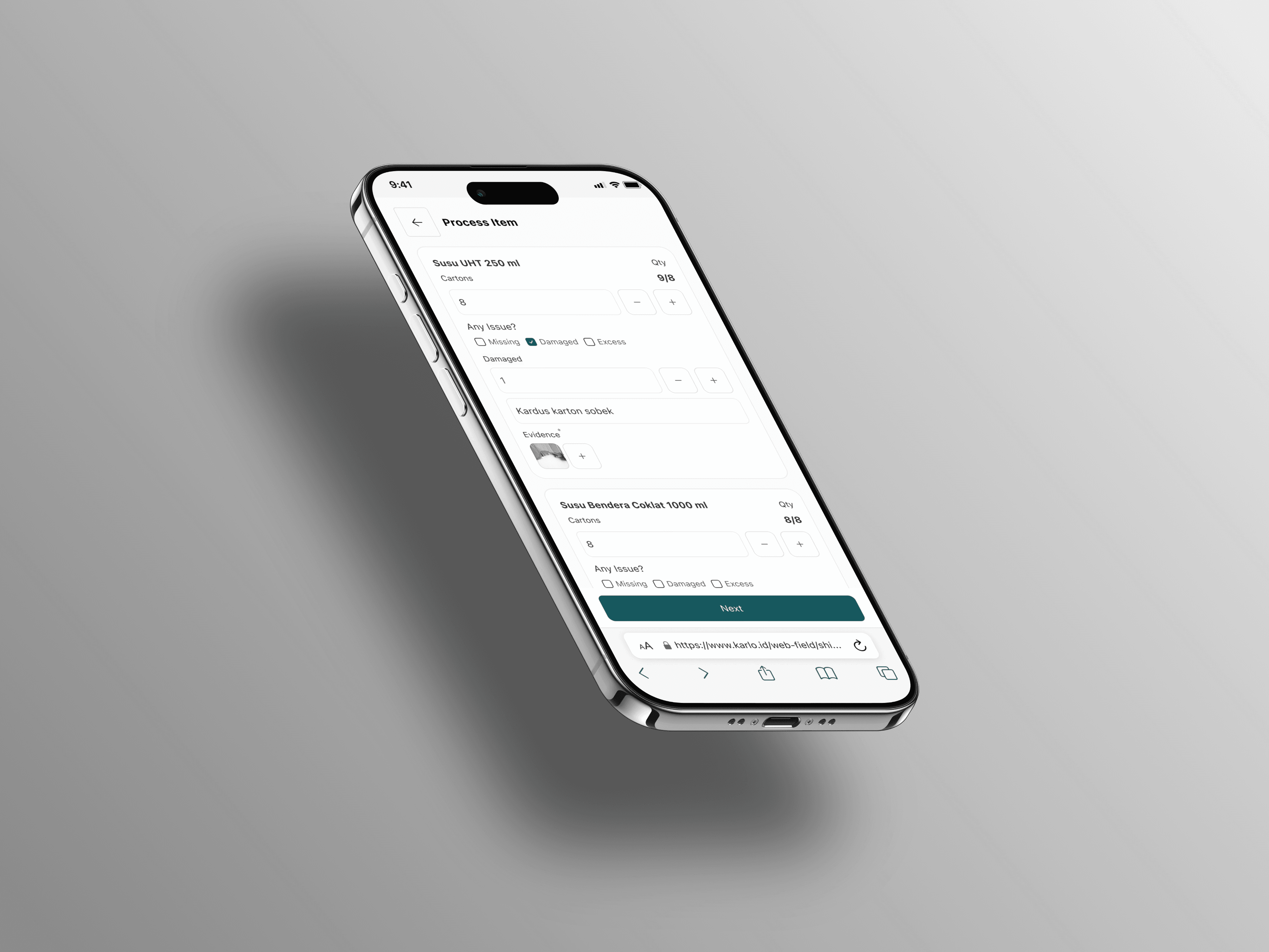
THE PROBLEM
Warehouse validation operates under intense time pressure, where order checking errors average 1% to 3%, draining up to 13% of business profitability through mis-shipments and processing delays. Field staff navigate high physical and cognitive strain while managing thousands of SKUs daily under harsh floor condition, such as poor lighting, constant motion, and damaged labels. Research shows that high cognitive workload in warehouse operations directly drives up scan errors and slows down throughput (Grosse et al., 2015).
Most enterprise tools fail on the warehouse floor because they lack seamless recovery when hardware or scans fail. Forcing operators to leave their workflow or contact supervisors during a scan failure creates severe bottlenecks, leading staff to bypass validation steps altogether to meet tight loading schedules.
Grosse, E. H., Glock, C. H., Jaber, M. Y., & Neumann, W. P. (2015). Human factors in order picking system design: A content analysis. International Journal of Production Research, 53(21), 6305–6326.
RESEARCH APPROACH
Without direct access to an active warehouse floor, the research approach relied on cognitive ergonomics principles to model high-stress operations. Field staff manage high mental workloads requiring interfaces that minimize mental friction and support instant error recovery (Cognitive Ergonomics Study, 2016).
Four roles touch this workflow, each with a different goal.

Webfield prioritizes the warehouse staff experience, as friction-free field interactions ensure the data accuracy required by drivers, supervisors, and customers downstream.
Cognitive Ergonomics Study. (2016). Cognitive ergonomics and its role for industry safety enhancements. International Journal of Industrial Ergonomics.
UNDERSTANDING THE WORKFLOW
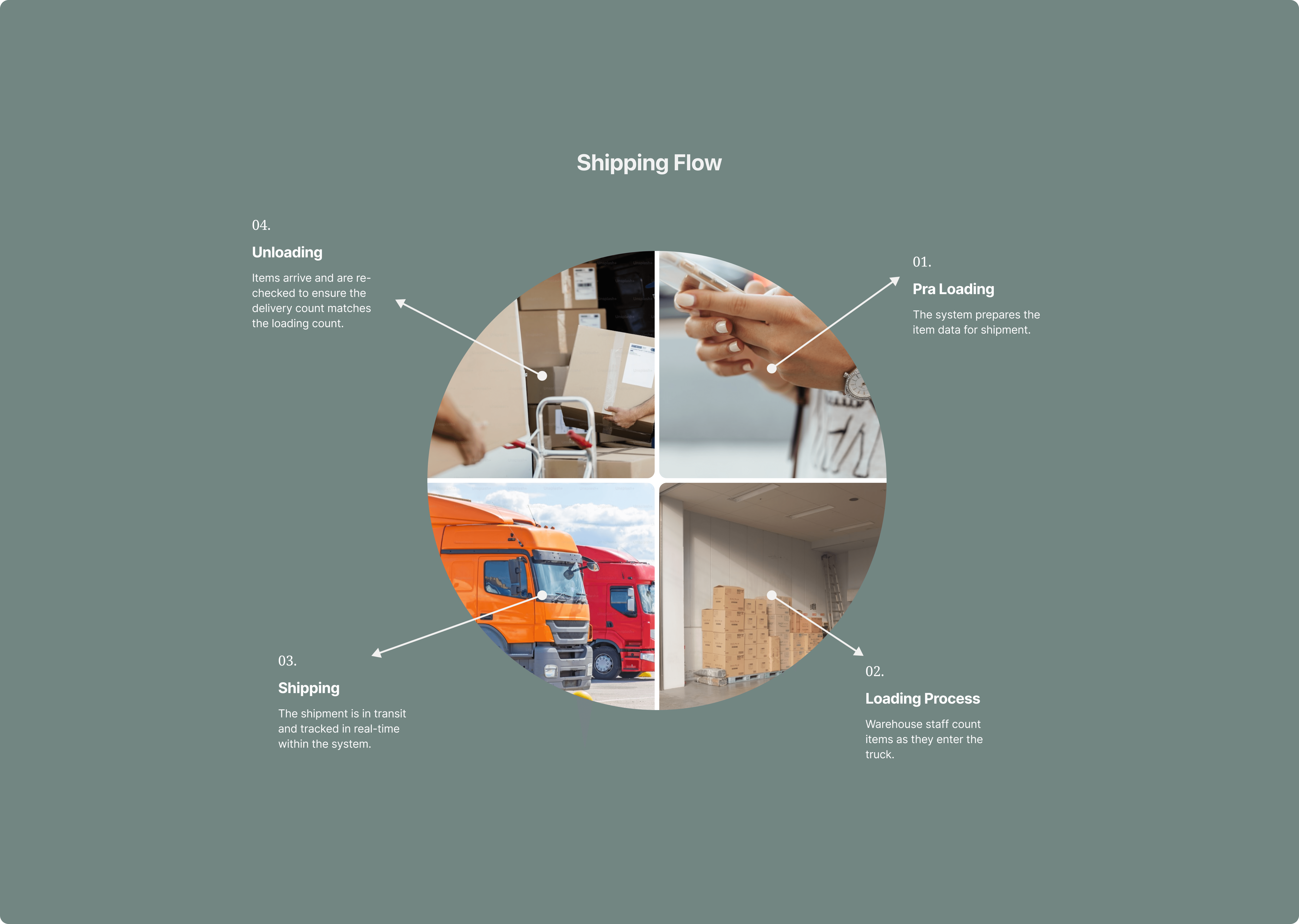
As a concept project, I modeled the end-to-end shipment journey across four core handoffs
Pre-loading -> Loading -> Shipping -> Unloading
By mapping operational friction points, I focused on where data breaks, such as mismatched counts during loading or unreadable labels mid-transit. The challenge was designing intuitive fallbacks directly into the workflow to keep validation accurate without slowing down operators.
KEY OPERATIONAL INSIGHTS
Mapping the workflow against how field operators actually work surfaced four patterns worth designing around.
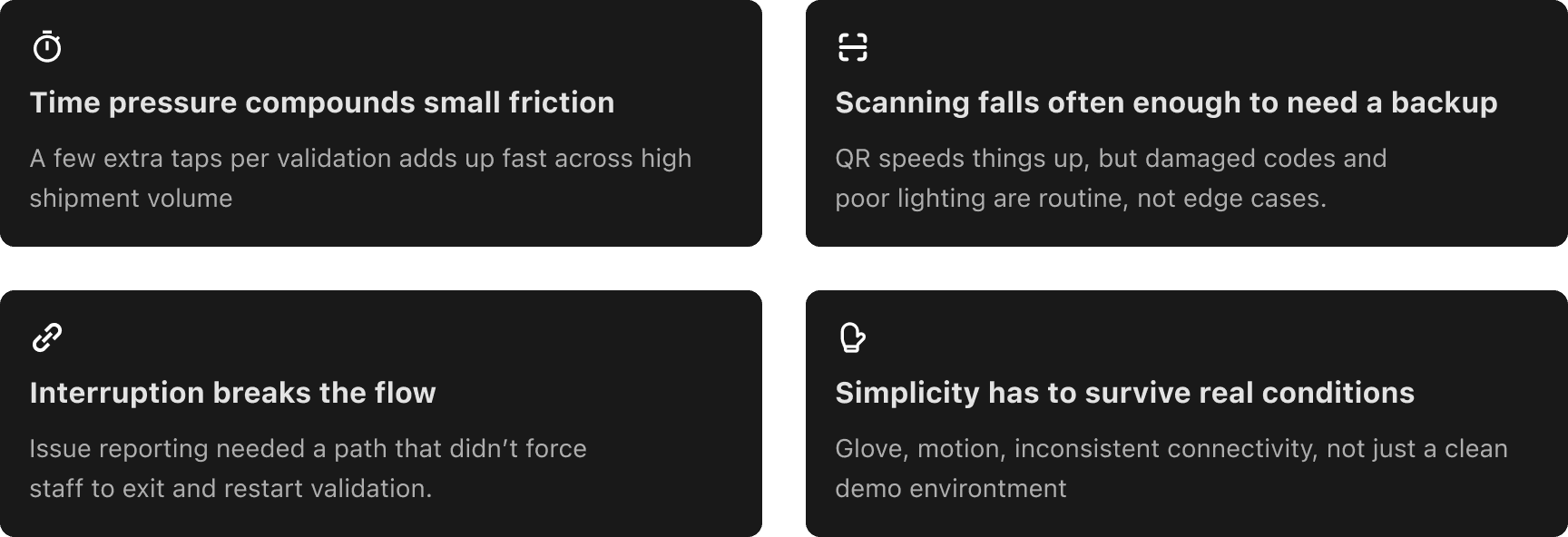
HOW MIGHT WE
HMW minimize interaction taps to protect throughput when every extra second per scan compounds into costly delays?
HMW architect an instant scan fallback for damaged labels or low lighting without breaking the data chain of custody?
HMW enable mid-flow exception logging so operators can report issues instantly without resetting their current task?
HMW design touch targets and visual feedback that remain reliable under gloved operation, rapid motion, and poor connectivity?
ARCHITECTURE INFORMATION
I structured Webfield around four core modules designed to keep the workflow clear, cut unnecessary steps, and speed up validation during loading and unloading.
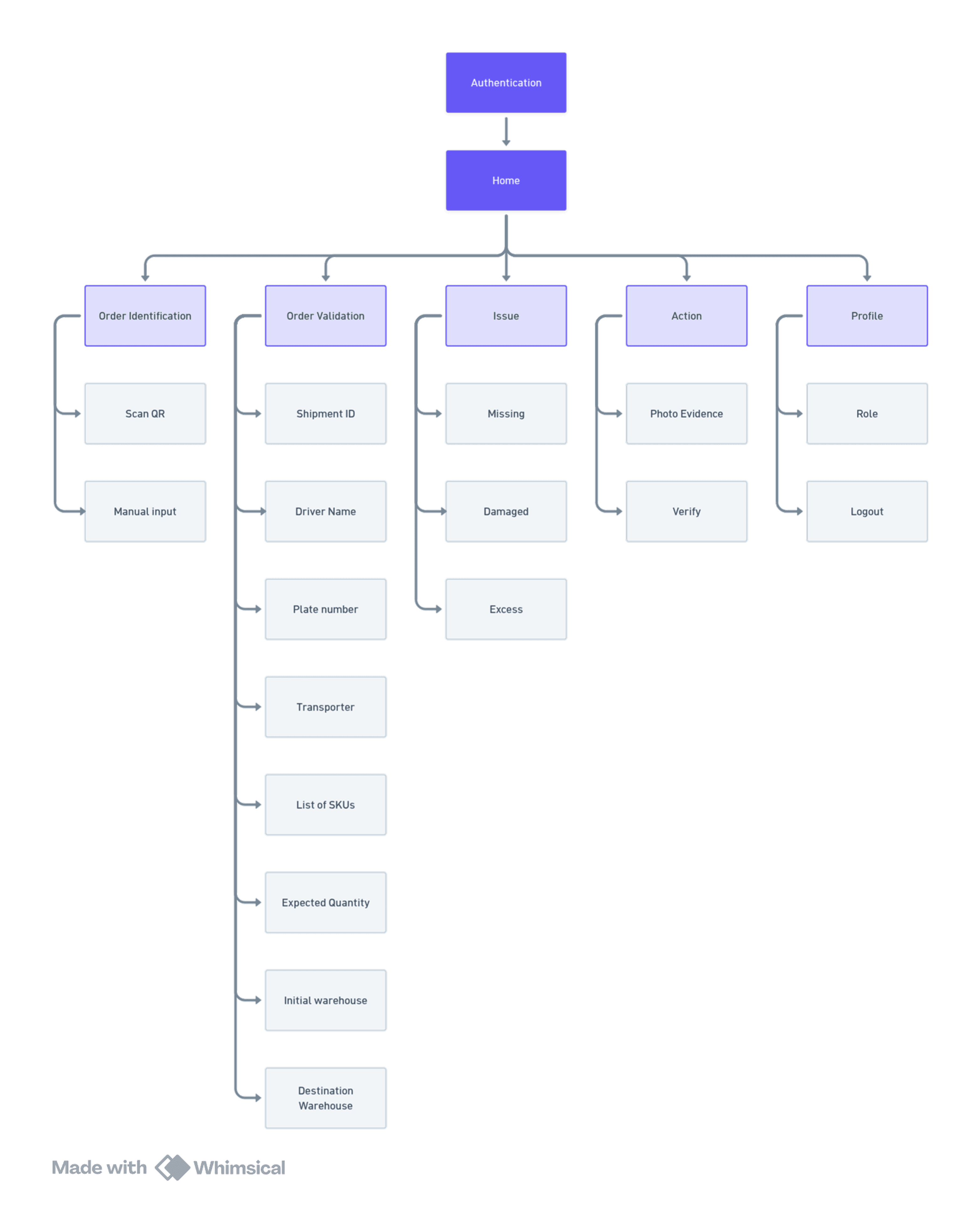
The system architecture was structured around four main operational modules:
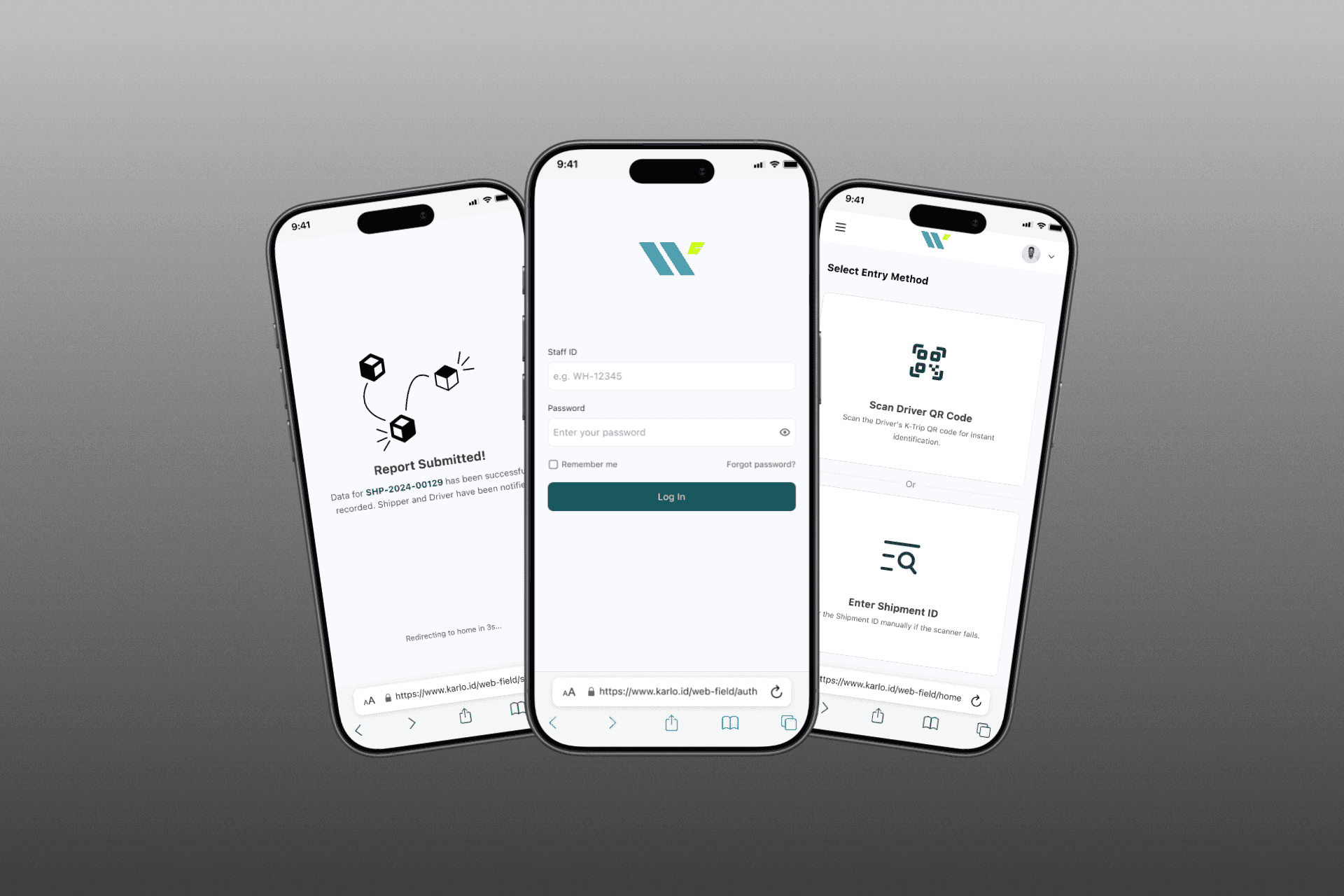
Order Identification — Supports fast shipment access through QR scanning and manual input fallback.
Order Validation — Displays shipment details and SKU information for goods verification.
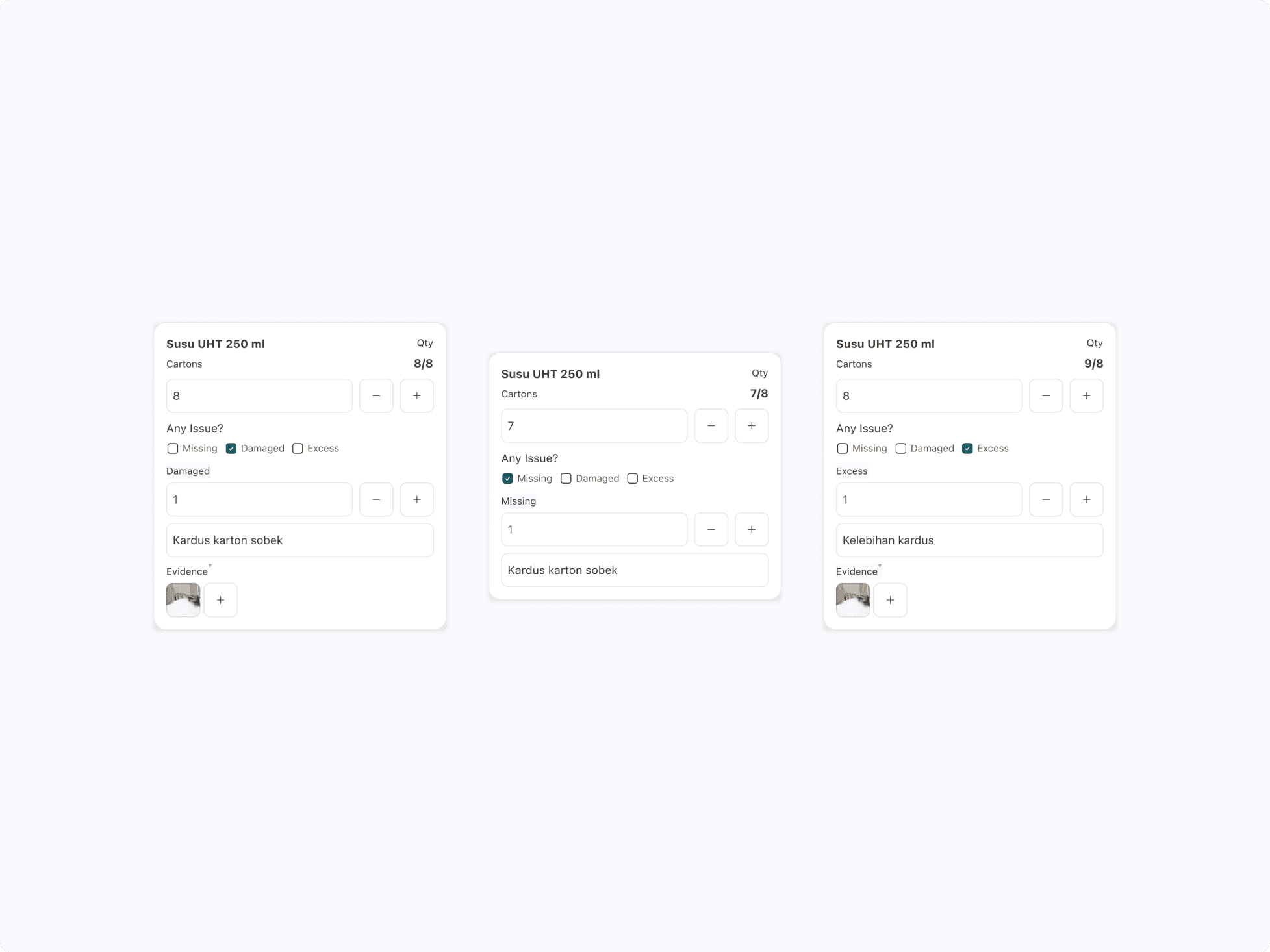
Issue Management — Handles reporting for damaged, missing, and excess goods during validation.
Final Verification — Provides shipment summary, photo evidence, and final confirmation before completion.
Design Decision 1
Flexible Shipment Identification
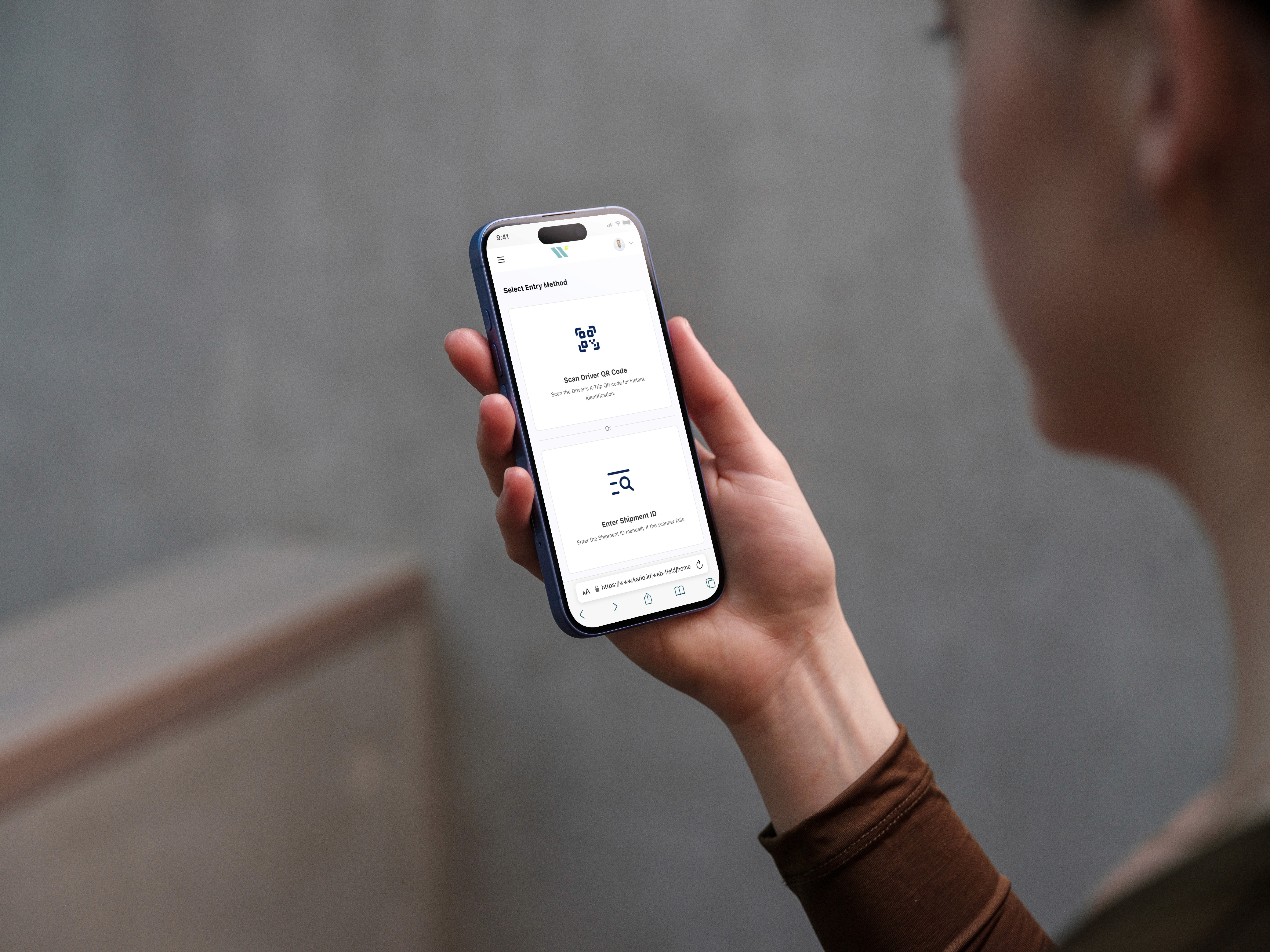
The identification flow lets staff access shipment data through QR scanning, with manual input as an equal fallback when scanning fails. Floor conditions make that common: bent labels, poor lighting, gloves. Staff are already at high cognitive load, so if manual entry feels like a lesser option, they skip verification instead of using it.
Technically, both paths write to the same shipment record, no new backend state to build or keep in sync.
Design decision 2
Guided Validation & Issue Reporting
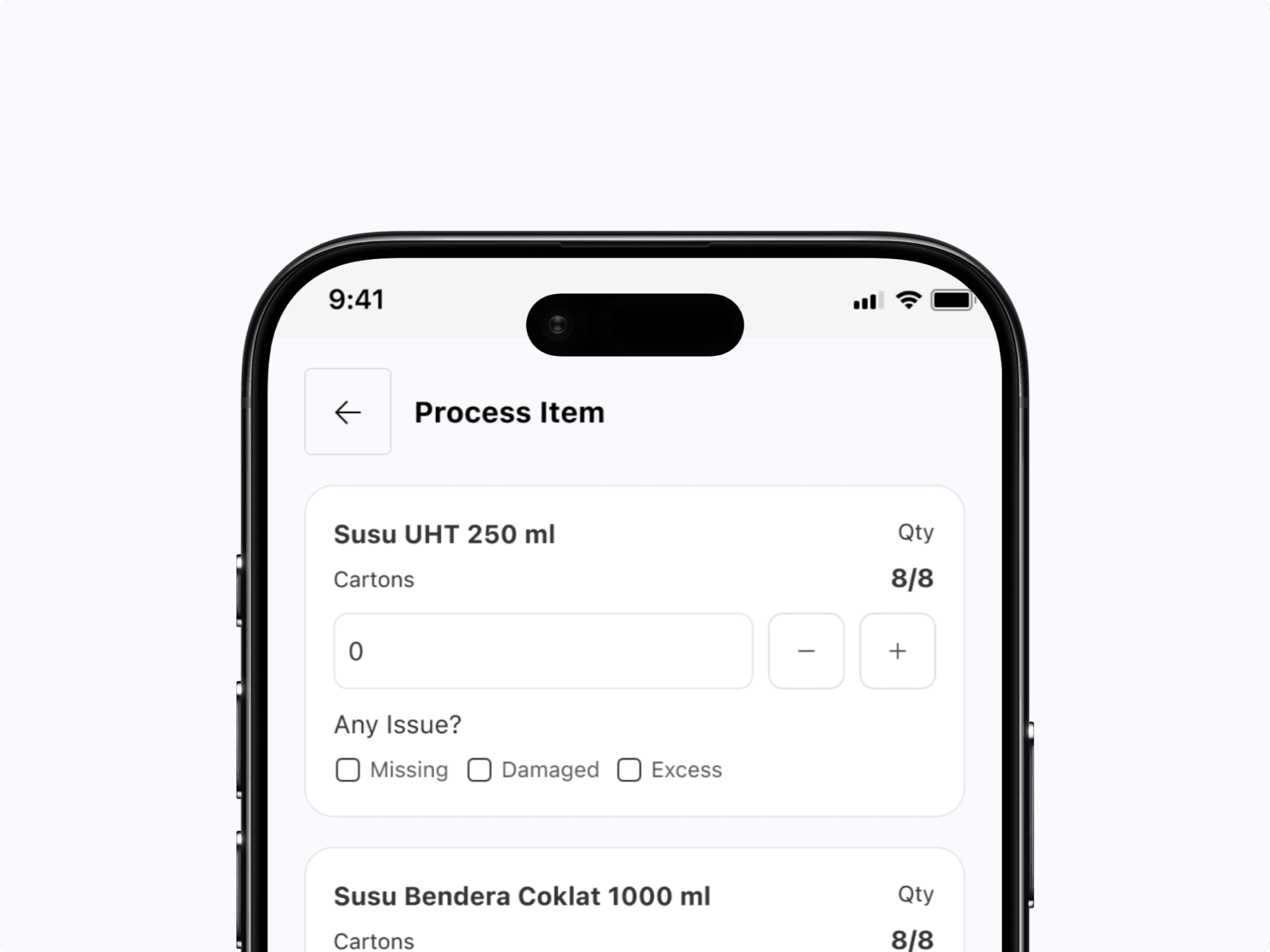
I built issue reporting (damaged, missing, or excess goods) right inside the validation flow, no exiting to a separate screen or waiting on a supervisor, because staff mid-task are already busy counting and checking condition. If reporting breaks that flow, it usually gets delayed or just forgotten.
Technically, I made it metadata attached to the existing shipment record, not a new workflow, since that meant no new state for engineering to build and keep in sync.
Design Decision 3
Final Verification & Shipment Traceability
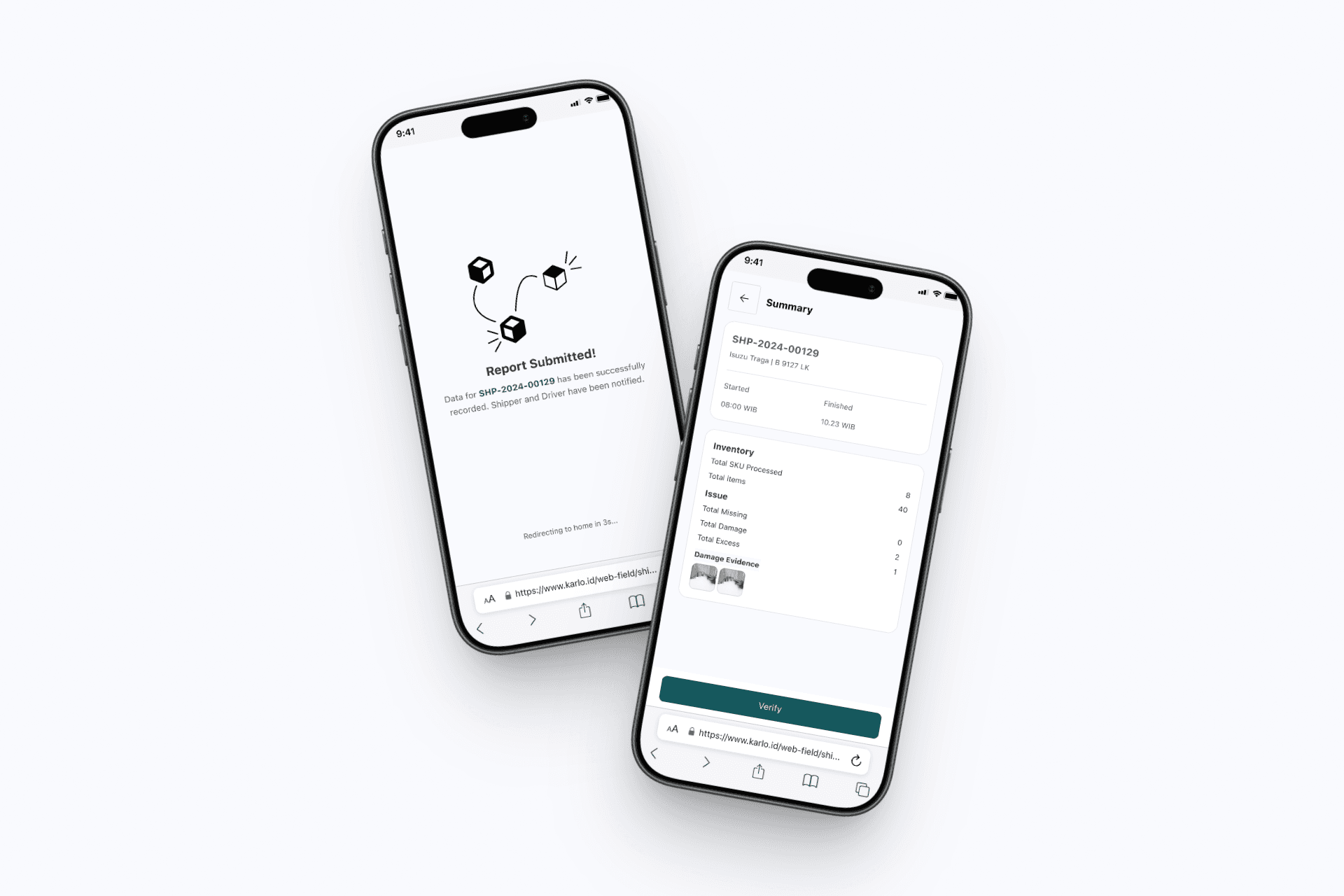
A final review step was introduced to give staff clearer visibility of shipment results before completion, helping ensure validation data remained accurate and properly documented.
Edge Cases
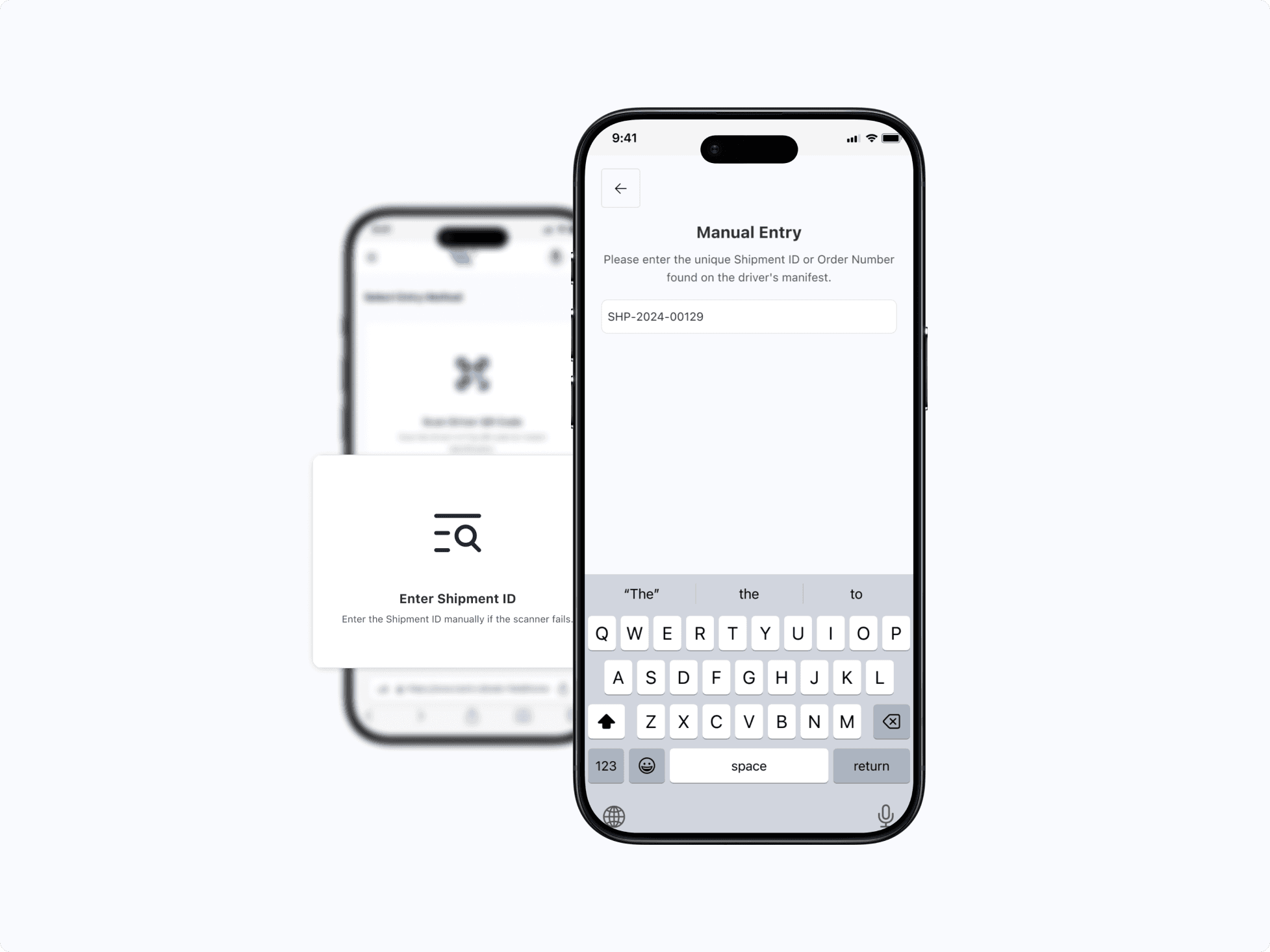
Unreadable QR Codes
Manual input was provided as a fallback when shipment identification could not be completed through scanning.
Damaged, Excess, or Missing Goods
Staff could report issues directly during the validation process without interrupting the workflow.
Potential Improvements
As logistics operations continue to scale, several opportunities could further strengthen the workflow and operational efficiency.
Offline Mode
Allow staff to continue validation activities during unstable warehouse connectivity.External Scanner Integration
Support Bluetooth barcode scanners for faster high-volume goods processing.Multi-User Collaboration
Enable multiple warehouse staff to validate shipments simultaneously on the same truck.Return Logistics Flow
Add dedicated handling for rejected or returned shipments.
reflection
This project helped me better understand how operational pressure shapes user behavior in warehouse environments. Rather than focusing only on interface design, the process pushed me to think more about workflow clarity, fallback scenarios, and how small interaction decisions can directly affect speed, accuracy, and coordination during real operational activities.
Webfield — Designing Field Operations for Modern Logistics
Designed a scan-failure fallback across four modules to keep warehouse shipment validation fast and accurate under real-world conditions.
Role
Product Designer, end-to-end from workflow mapping to system architecture
Industry
Logistics & Supply Chain
Type
Concept Project
Year
2026
THE PROBLEM
Warehouse validation operates under intense time pressure, where order checking errors average 1% to 3%, draining up to 13% of business profitability through mis-shipments and processing delays. Field staff navigate high physical and cognitive strain while managing thousands of SKUs daily under harsh floor condition, such as poor lighting, constant motion, and damaged labels. Research shows that high cognitive workload in warehouse operations directly drives up scan errors and slows down throughput (Grosse et al., 2015).
Most enterprise tools fail on the warehouse floor because they lack seamless recovery when hardware or scans fail. Forcing operators to leave their workflow or contact supervisors during a scan failure creates severe bottlenecks, leading staff to bypass validation steps altogether to meet tight loading schedules.
Grosse, E. H., Glock, C. H., Jaber, M. Y., & Neumann, W. P. (2015). Human factors in order picking system design: A content analysis. International Journal of Production Research, 53(21), 6305–6326.
RESEARCH APPROACH
Without direct access to an active warehouse floor, the research approach relied on cognitive ergonomics principles to model high-stress operations. Field staff manage high mental workloads requiring interfaces that minimize mental friction and support instant error recovery (Cognitive Ergonomics Study, 2016).
Four roles touch this workflow, each with a different goal.
Webfield prioritizes the warehouse staff experience, as friction-free field interactions ensure the data accuracy required by drivers, supervisors, and customers downstream.
Cognitive Ergonomics Study. (2016). Cognitive ergonomics and its role for industry safety enhancements. International Journal of Industrial Ergonomics.
UNDERSTANDING THE WORKFLOW
As a concept project, I modeled the end-to-end shipment journey across four core handoffs
Pre-loading -> Loading -> Shipping -> Unloading
By mapping operational friction points, I focused on where data breaks, such as mismatched counts during loading or unreadable labels mid-transit. The challenge was designing intuitive fallbacks directly into the workflow to keep validation accurate without slowing down operators.
KEY OPERATIONAL INSIGHTS
Mapping the workflow against how field operators actually work surfaced four patterns worth designing around.
HOW MIGHT WE
HMW minimize interaction taps to protect throughput when every extra second per scan compounds into costly delays?
HMW architect an instant scan fallback for damaged labels or low lighting without breaking the data chain of custody?
HMW enable mid-flow exception logging so operators can report issues instantly without resetting their current task?
HMW design touch targets and visual feedback that remain reliable under gloved operation, rapid motion, and poor connectivity?
ARCHITECTURE INFORMATION
I structured Webfield around four core modules designed to keep the workflow clear, cut unnecessary steps, and speed up validation during loading and unloading.
The system architecture was structured around four main operational modules:
Order Identification — Supports fast shipment access through QR scanning and manual input fallback.
Order Validation — Displays shipment details and SKU information for goods verification.
Issue Management — Handles reporting for damaged, missing, and excess goods during validation.
Final Verification — Provides shipment summary, photo evidence, and final confirmation before completion.
Design Decision 1
Flexible Shipment Identification
The identification flow lets staff access shipment data through QR scanning, with manual input as an equal fallback when scanning fails. Floor conditions make that common: bent labels, poor lighting, gloves. Staff are already at high cognitive load, so if manual entry feels like a lesser option, they skip verification instead of using it.
Technically, both paths write to the same shipment record, no new backend state to build or keep in sync.
Design decision 2
Guided Validation & Issue Reporting
I built issue reporting (damaged, missing, or excess goods) right inside the validation flow, no exiting to a separate screen or waiting on a supervisor, because staff mid-task are already busy counting and checking condition. If reporting breaks that flow, it usually gets delayed or just forgotten.
Technically, I made it metadata attached to the existing shipment record, not a new workflow, since that meant no new state for engineering to build and keep in sync.
Design Decision 3
Final Verification & Shipment Traceability
A final review step was introduced to give staff clearer visibility of shipment results before completion, helping ensure validation data remained accurate and properly documented.
Edge Cases
Unreadable QR Codes
Manual input was provided as a fallback when shipment identification could not be completed through scanning.
Damaged, Excess, or Missing Goods
Staff could report issues directly during the validation process without interrupting the workflow.
Potential Improvements
As logistics operations continue to scale, several opportunities could further strengthen the workflow and operational efficiency.
Offline Mode
Allow staff to continue validation activities during unstable warehouse connectivity.External Scanner Integration
Support Bluetooth barcode scanners for faster high-volume goods processing.Multi-User Collaboration
Enable multiple warehouse staff to validate shipments simultaneously on the same truck.Return Logistics Flow
Add dedicated handling for rejected or returned shipments.
reflection
This project helped me better understand how operational pressure shapes user behavior in warehouse environments. Rather than focusing only on interface design, the process pushed me to think more about workflow clarity, fallback scenarios, and how small interaction decisions can directly affect speed, accuracy, and coordination during real operational activities.