Challenge
Warehouse validation processes often operate under tight time pressure, where staff need to verify large volumes of goods quickly while keeping shipment data accurate and traceable. The challenge in designing Webfield was creating a workflow that could support fast loading and unloading operations, handle real-world issues like damaged or missing goods, and still remain simple enough to use reliably in busy warehouse environments.
Understanding the workflow
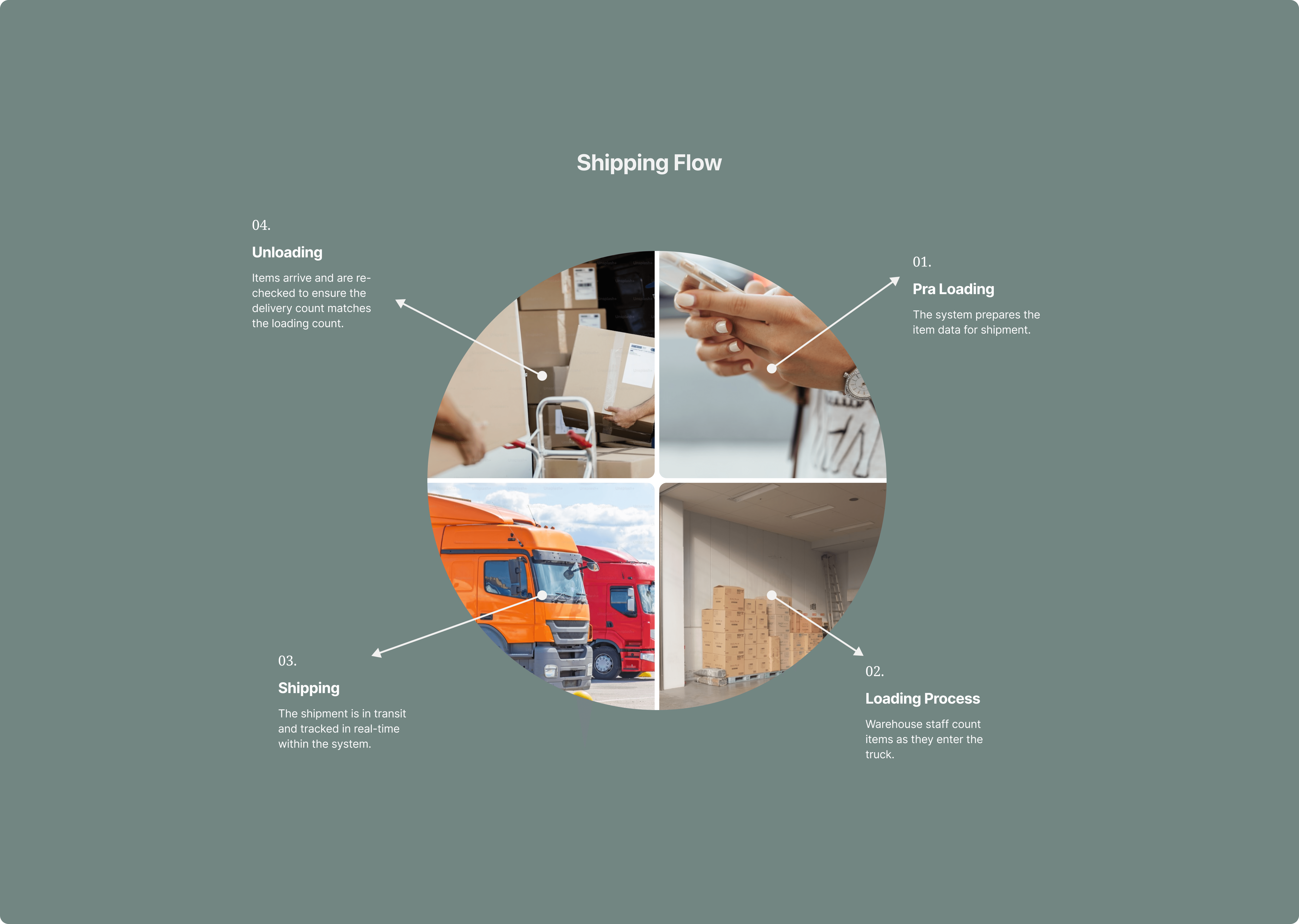
I mapped the shipment operation into four main stages: pre-loading, loading process, shipping process, and unloading process. Through this workflow, I identified how warehouse staff handled goods validation, issue reporting, and shipment verification under fast-paced operational conditions.
The complete operational flow can be viewed through this Whimsical documentation.
Key Operational Findings
Warehouse staff worked under constant time pressure during shipment validation.
Issue reporting needed to happen without interrupting operational flow.
QR scanning accelerated identification, but fallback input was still necessary.
The workflow needed to stay fast, simple, and reliable in warehouse conditions.
System Architecture
I structured Webfield into several core modules covering shipment identification, goods validation, issue reporting, and final verification. The architecture was designed to keep the workflow clear, reduce unnecessary operational steps, and support faster validation during loading and unloading activities.
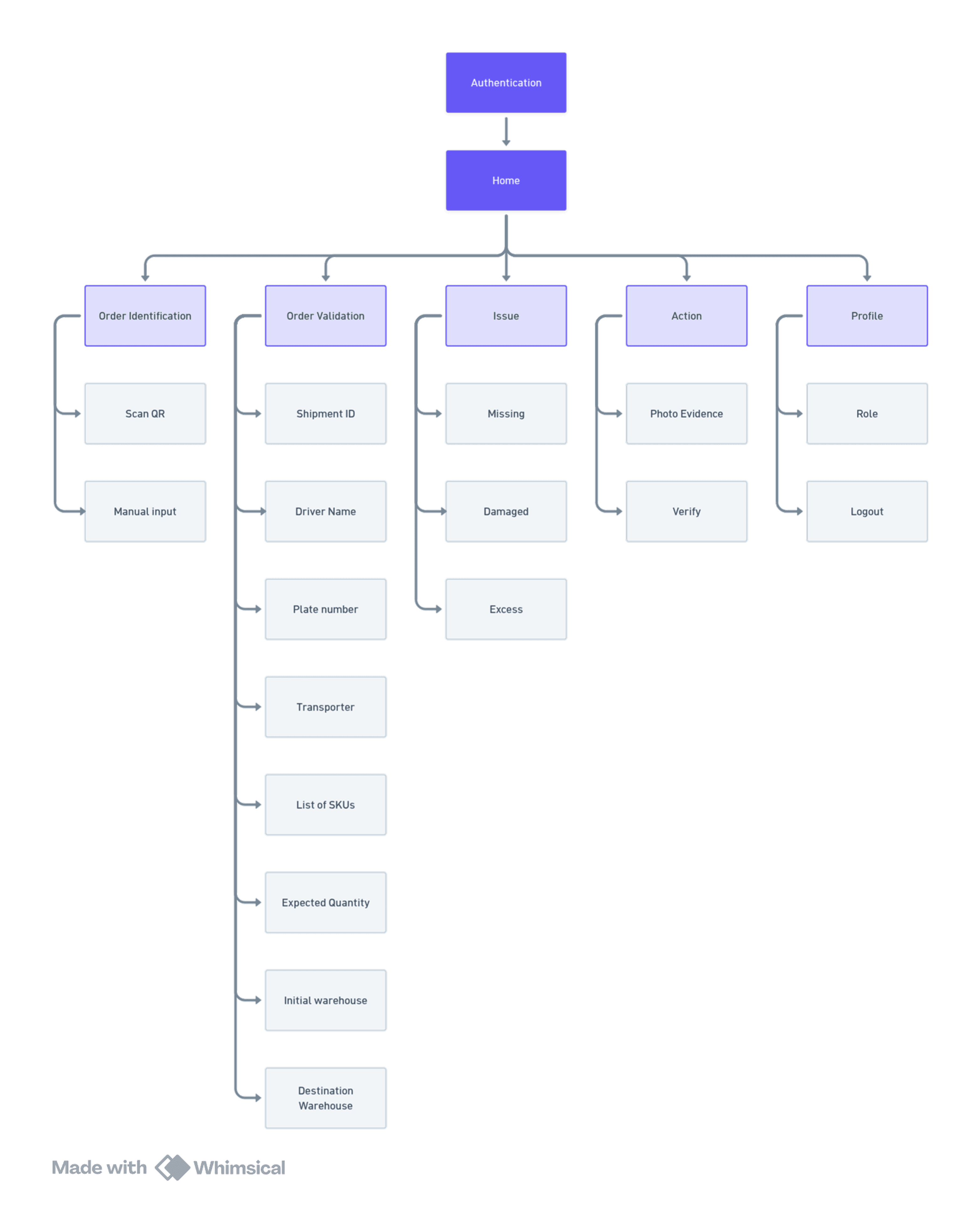
The system architecture was structured around four main operational modules:
Order Identification — Supports fast shipment access through QR scanning and manual input fallback.
Order Validation — Displays shipment details and SKU information for goods verification.
Issue Management — Handles reporting for damaged, missing, and excess goods during validation.
Final Verification — Provides shipment summary, photo evidence, and final confirmation before completion.
Design Principle
Reduce Cognitive Load
Simplified the validation flow to help staff process shipments with less mental effort during busy operations.Use Familiar Patterns
Applied recognizable interaction patterns to make the system easier to learn and operate in the field.Make It Accessible
Used large touch targets, clear hierarchy, and readable typography to support faster interaction across warehouse environments.Focus on Essential Actions
Kept the workflow centered on core operational tasks to avoid unnecessary friction during shipment validation.
Design Decision 1
Flexible Shipment Identification
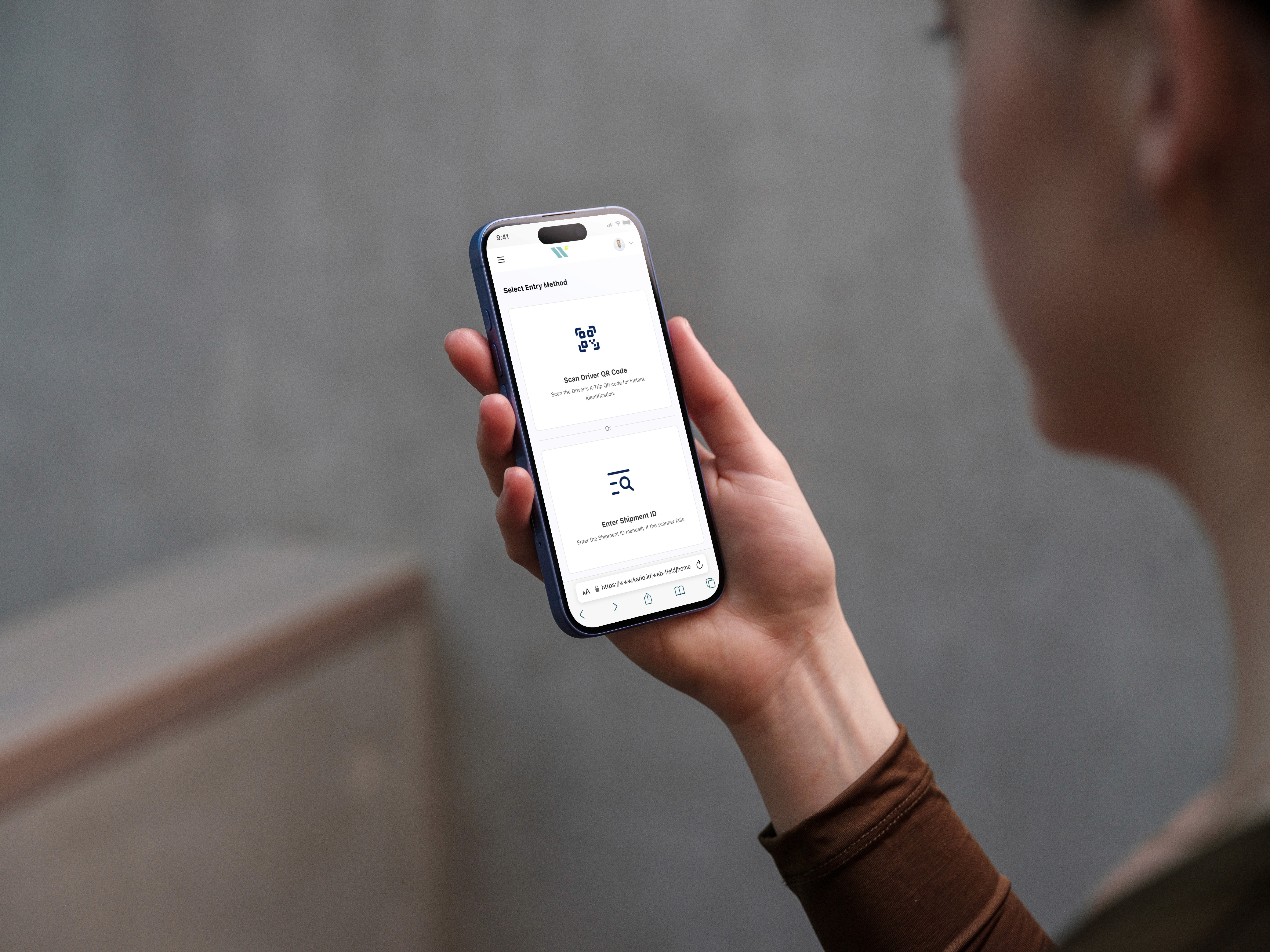
The identification flow was designed to help warehouse staff access shipment data quickly through QR scanning, while still providing manual input as a fallback when field conditions were less reliable.
Design decision 2
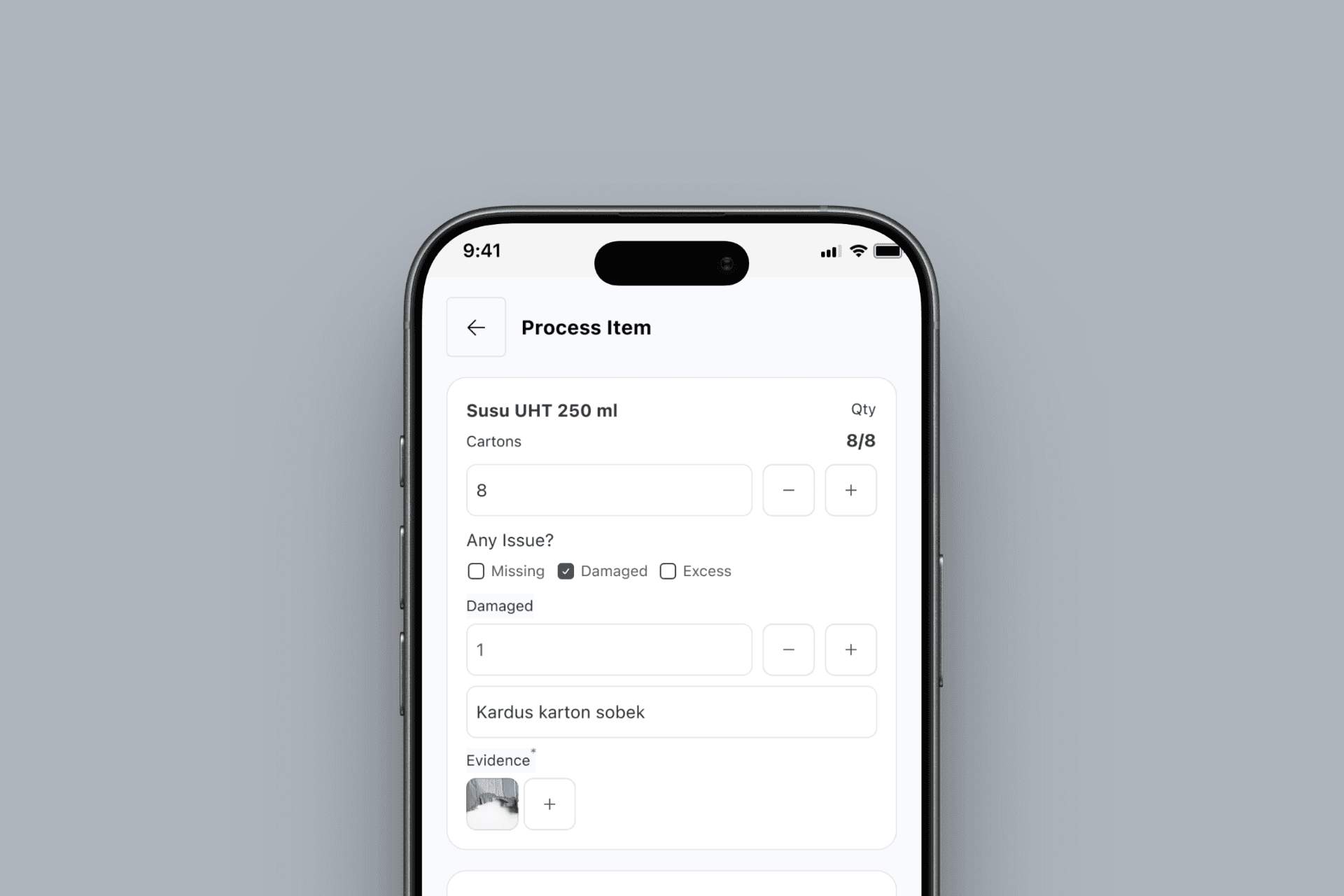
Guided Validation & Issue Reporting
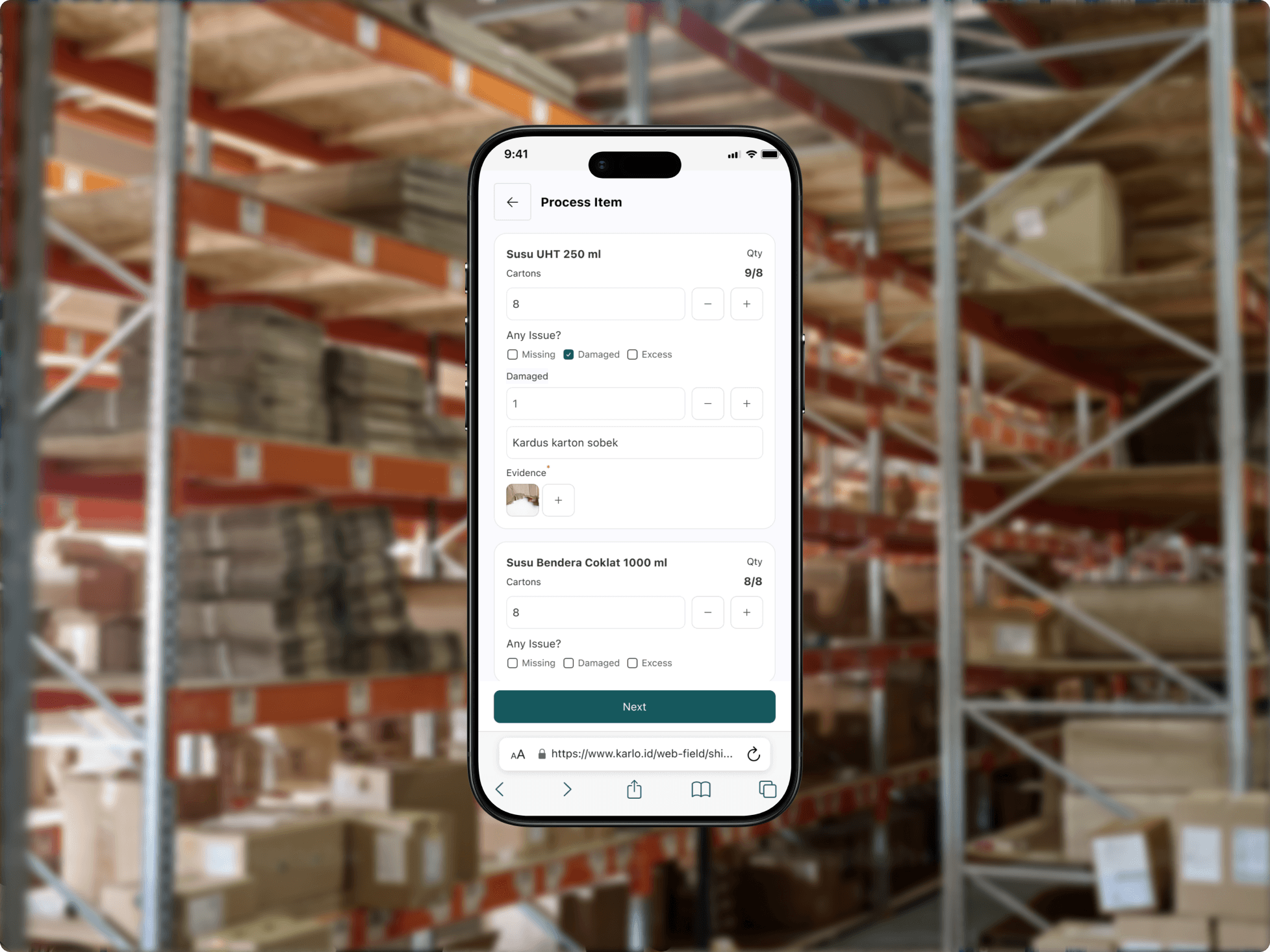
The validation workflow was structured to help staff check goods, report shipment issues, and complete verification in a more organized and traceable process without slowing warehouse operations.
Design Decision 3
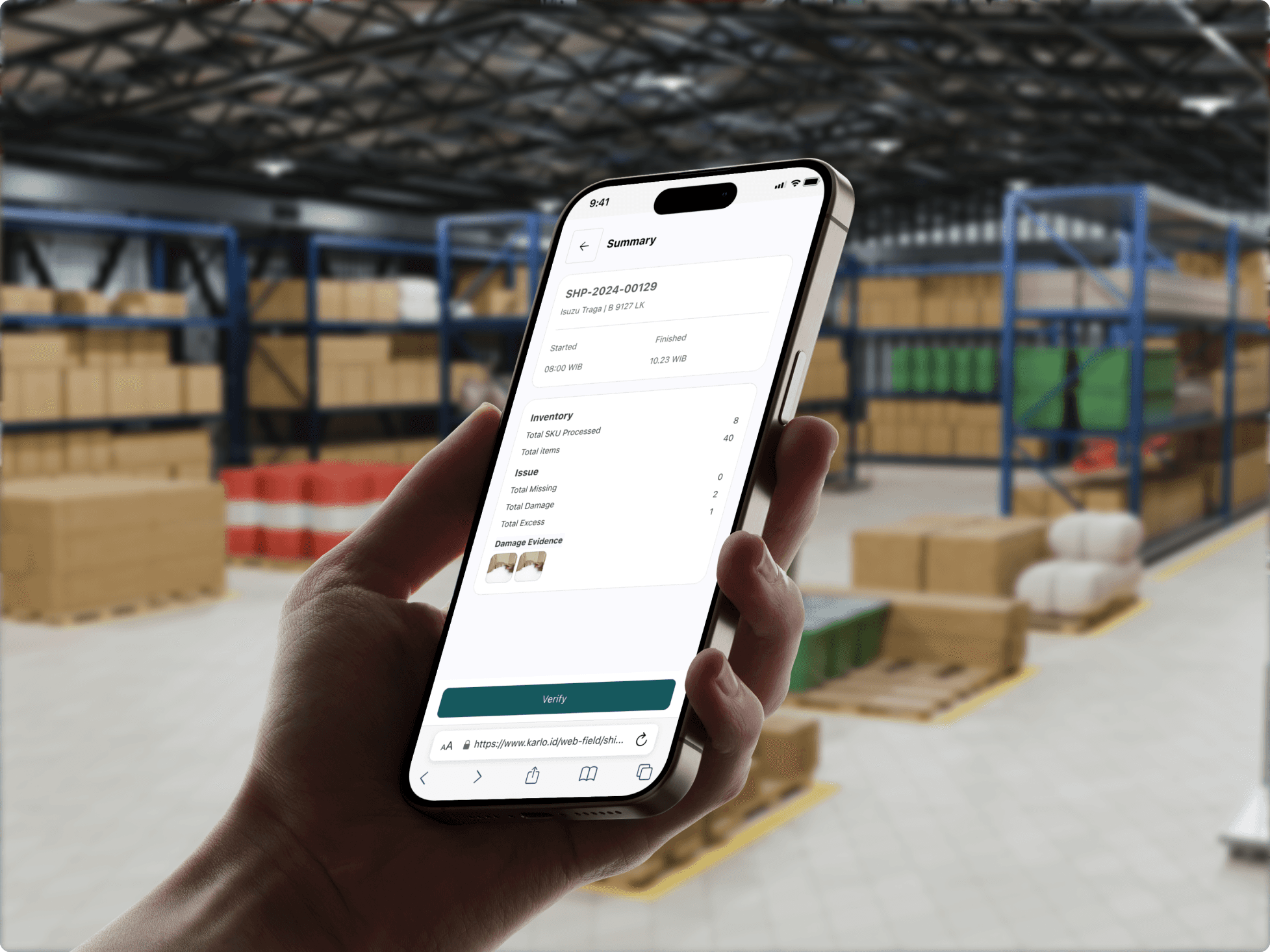
Final Verification & Shipment Traceability
A final review step was introduced to give staff clearer visibility of shipment results before completion, helping ensure validation data remained accurate and properly documented.
reflection
Webfield — Designing Field Operations for Modern Logistics
Balancing speed and accuracy in warehouse shipment validation processes.
Role
Product Designer
Industry
Logistics & Supply Chain
Type
Concept Project
Year
2026
Challenge
Warehouse validation processes often operate under tight time pressure, where staff need to verify large volumes of goods quickly while keeping shipment data accurate and traceable. The challenge in designing Webfield was creating a workflow that could support fast loading and unloading operations, handle real-world issues like damaged or missing goods, and still remain simple enough to use reliably in busy warehouse environments.
Understanding the workflow
I mapped the shipment operation into four main stages: pre-loading, loading process, shipping process, and unloading process. Through this workflow, I identified how warehouse staff handled goods validation, issue reporting, and shipment verification under fast-paced operational conditions.
The complete operational flow can be viewed through this Whimsical documentation.
Key Operational Findings
Warehouse staff worked under constant time pressure during shipment validation.
Issue reporting needed to happen without interrupting operational flow.
QR scanning accelerated identification, but fallback input was still necessary.
The workflow needed to stay fast, simple, and reliable in warehouse conditions.
System Architecture
I structured Webfield into several core modules covering shipment identification, goods validation, issue reporting, and final verification. The architecture was designed to keep the workflow clear, reduce unnecessary operational steps, and support faster validation during loading and unloading activities.
The system architecture was structured around four main operational modules:
Order Identification — Supports fast shipment access through QR scanning and manual input fallback.
Order Validation — Displays shipment details and SKU information for goods verification.
Issue Management — Handles reporting for damaged, missing, and excess goods during validation.
Final Verification — Provides shipment summary, photo evidence, and final confirmation before completion.
Design Principle
Reduce Cognitive Load
Simplified the validation flow to help staff process shipments with less mental effort during busy operations.Use Familiar Patterns
Applied recognizable interaction patterns to make the system easier to learn and operate in the field.Make It Accessible
Used large touch targets, clear hierarchy, and readable typography to support faster interaction across warehouse environments.Focus on Essential Actions
Kept the workflow centered on core operational tasks to avoid unnecessary friction during shipment validation.
Design Decision 1
Flexible Shipment Identification
The identification flow was designed to help warehouse staff access shipment data quickly through QR scanning, while still providing manual input as a fallback when field conditions were less reliable.
Design decision 2
Guided Validation & Issue Reporting
The validation workflow was structured to help staff check goods, report shipment issues, and complete verification in a more organized and traceable process without slowing warehouse operations.
Design Decision 3
Final Verification & Shipment Traceability
A final review step was introduced to give staff clearer visibility of shipment results before completion, helping ensure validation data remained accurate and properly documented.
reflection