CONTEXT
Syncra is an internal platform used to create approval workflows for processes such as expenses, procurement, and leave requests.
Before a workflow can be published, it must comply with company approval policies. However, validation only occurred at the final publishing stage, causing managers to discover errors after completing the entire workflow setup.
This created a repetitive trial-and-error experience that increased rework and reduced publishing success.
The challenge was to help managers detect policy issues earlier during workflow configuration.
understanding the workflow
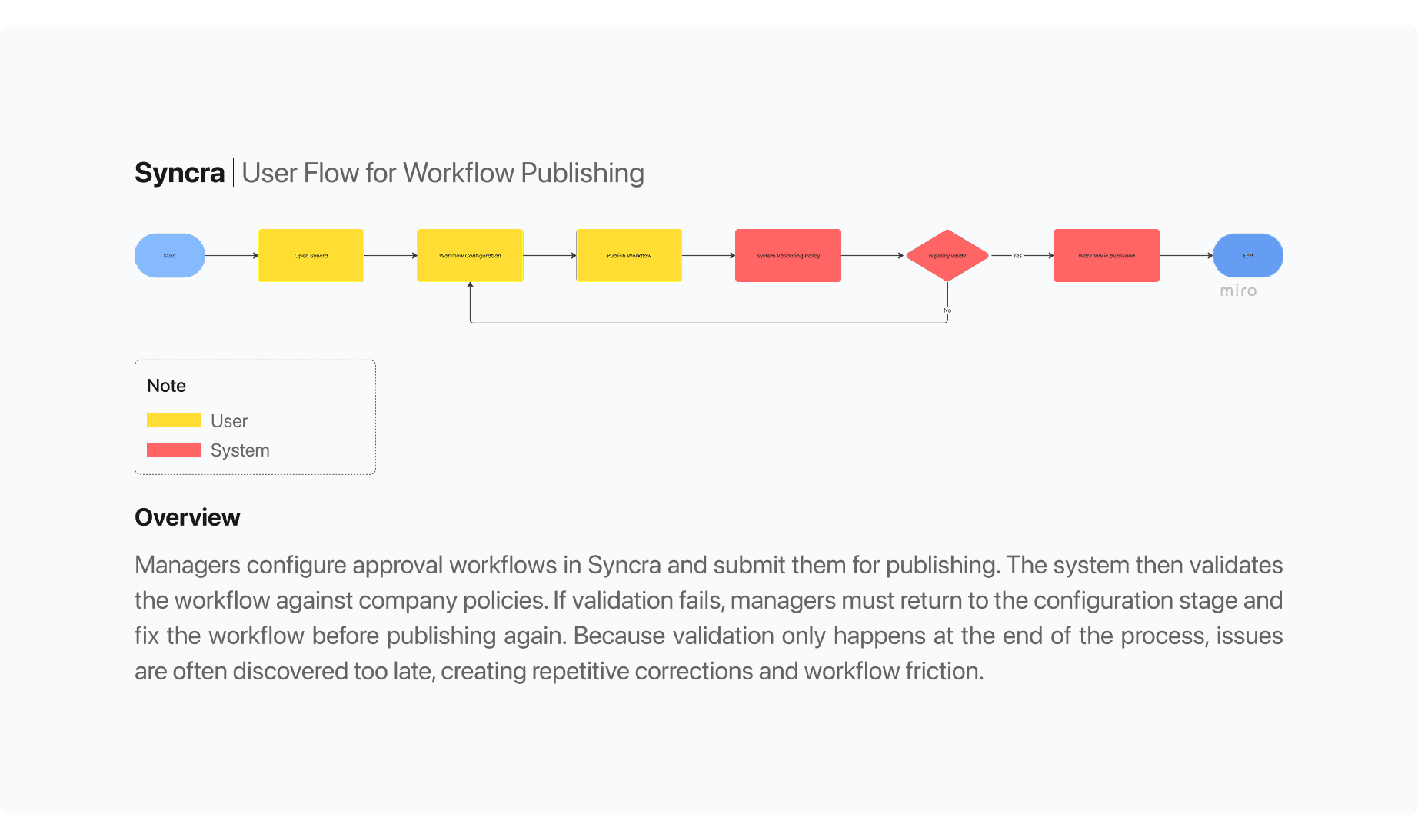
Based on the challenge brief, I mapped the current workflow creation process to better understand how late-stage policy validation affected the publishing experience and contributed to repetitive workflow corrections.
Identifying the problem
Late Constraint Visibility
Managers only discover policy violations during publishing.Delayed Feedback
Validation occurs after users complete the workflow setup process.Repetitive Corrections
Users must revisit multiple workflow steps after validation fails.Workflow Abandonment
Repeated publishing failures reduce completion confidence.
Defining the Goal
The goal was to improve workflow publishing success by helping managers detect policy issues earlier during workflow configuration.
Instead of relying on validation only at the final publishing stage, the experience needed to provide clearer guidance throughout the workflow creation process — reducing repetitive corrections and improving publishing confidence.
Exploring the Solution
Ideas
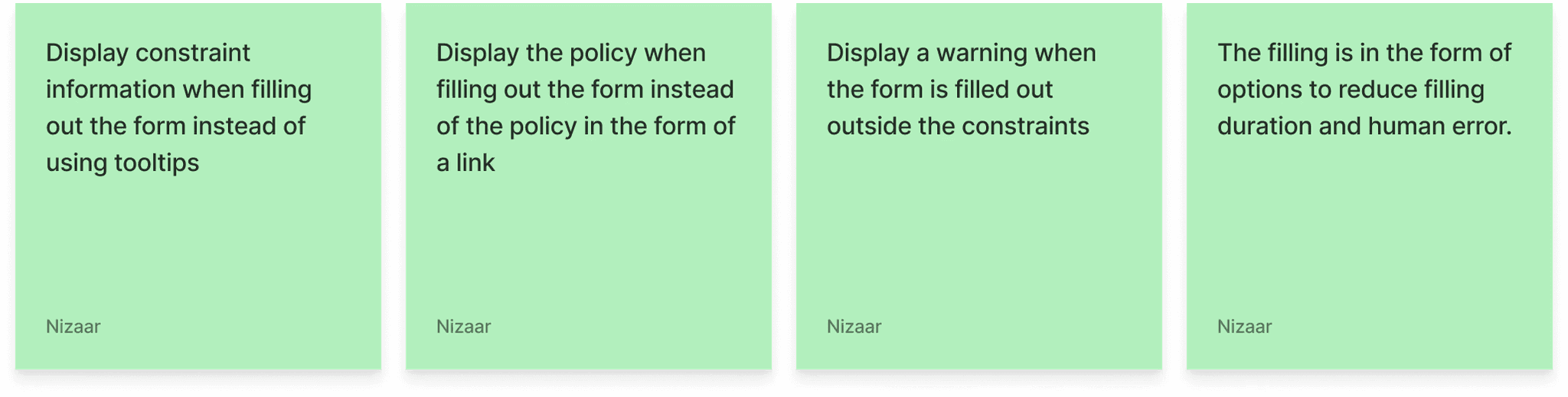
To reduce late-stage publishing failures, I explored different ways to integrate policy validation directly into the workflow creation process.
Information Architecture
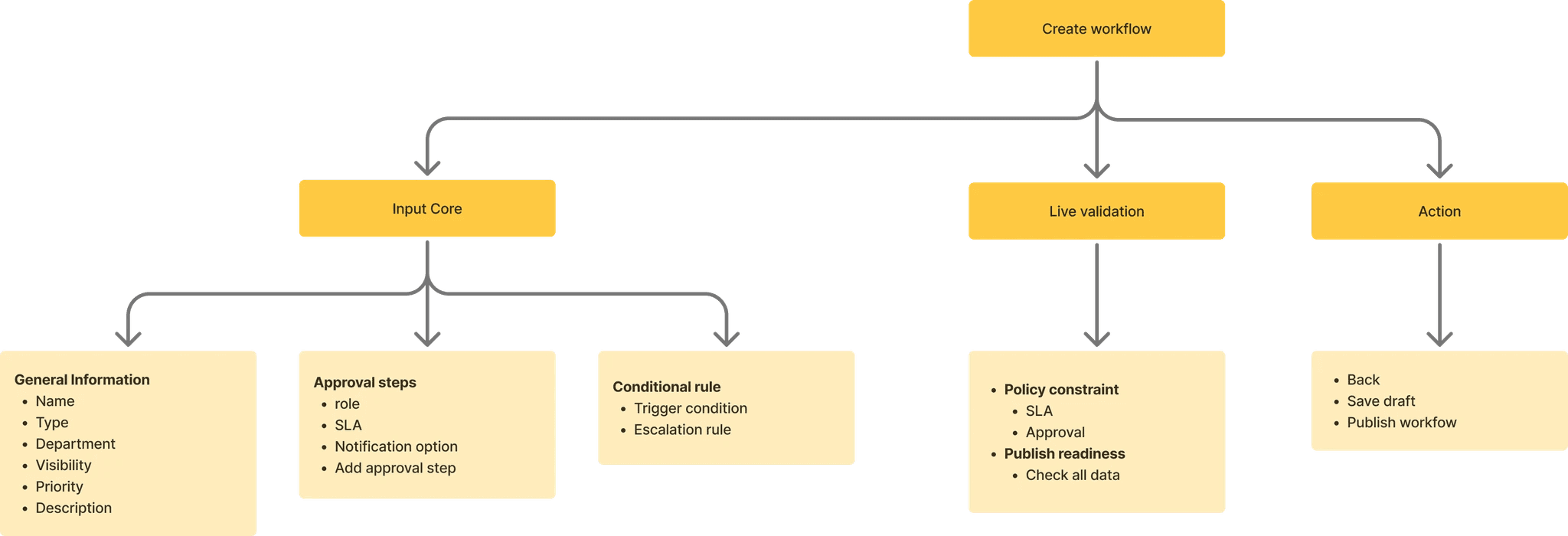
I also structured an architecture embeds validation checkpoints throughout the workflow setup process. This structure allows the to evaluate constraints progressively as managers configure approval steps.
Wireframe
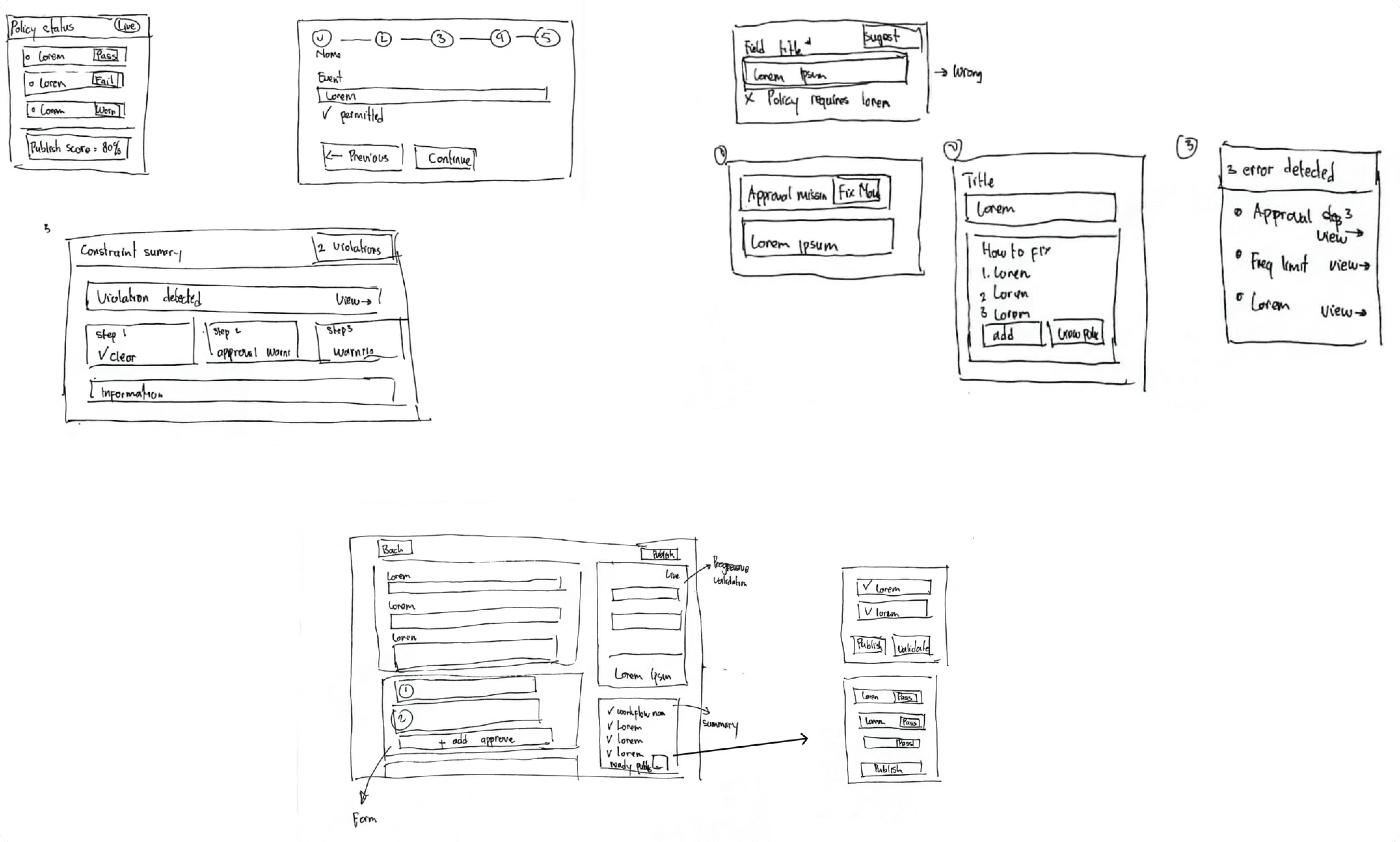
Several interaction approaches were explored to determine how policy constraints could be integrated into the workflow creation process. The sketches focused on testing different ways to:
Display validation feedback during configuration
Guide managers through compliant approval structures
Minimize interruptions while building workflows
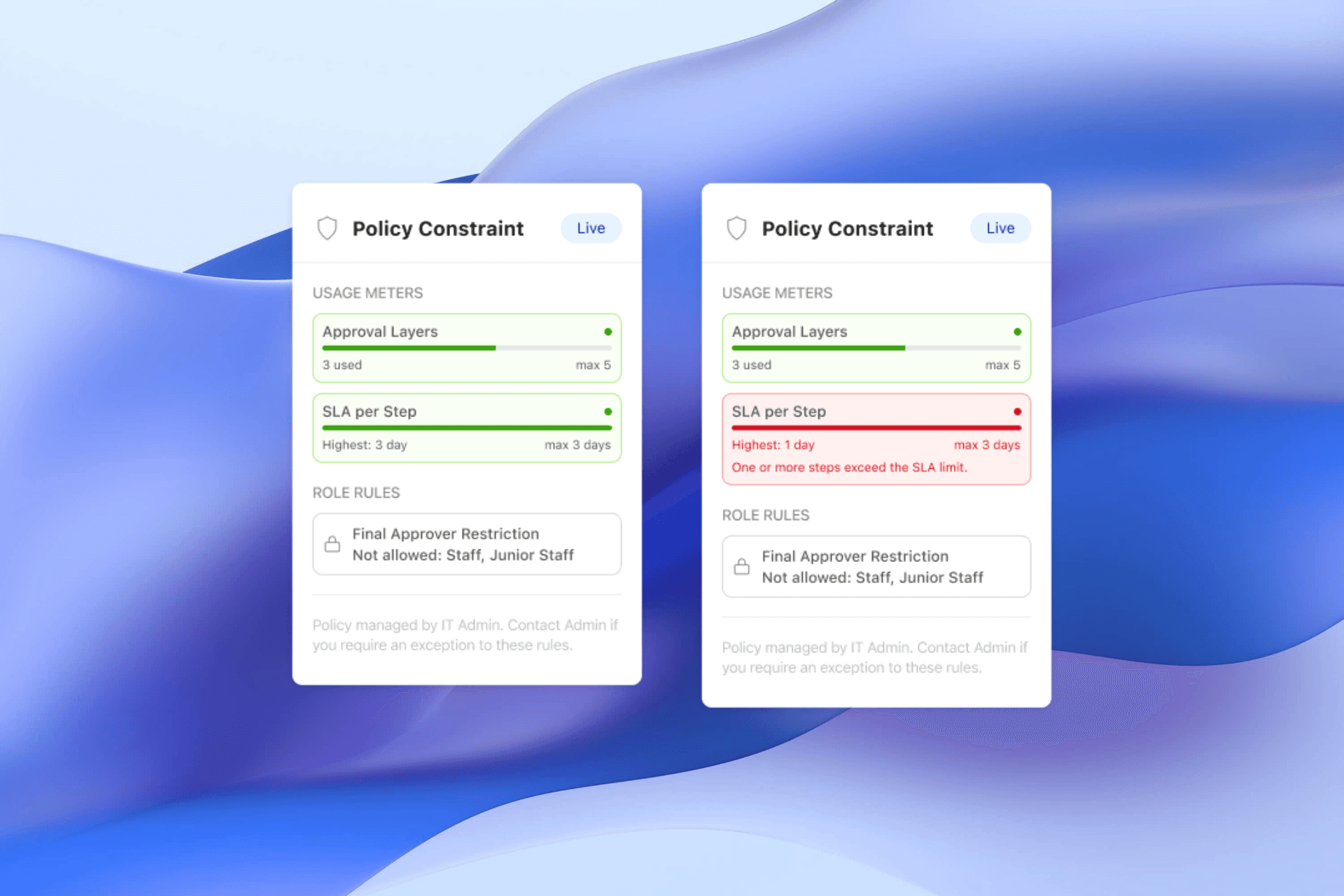
Design Decision 1
Progressive Validation During Configuration
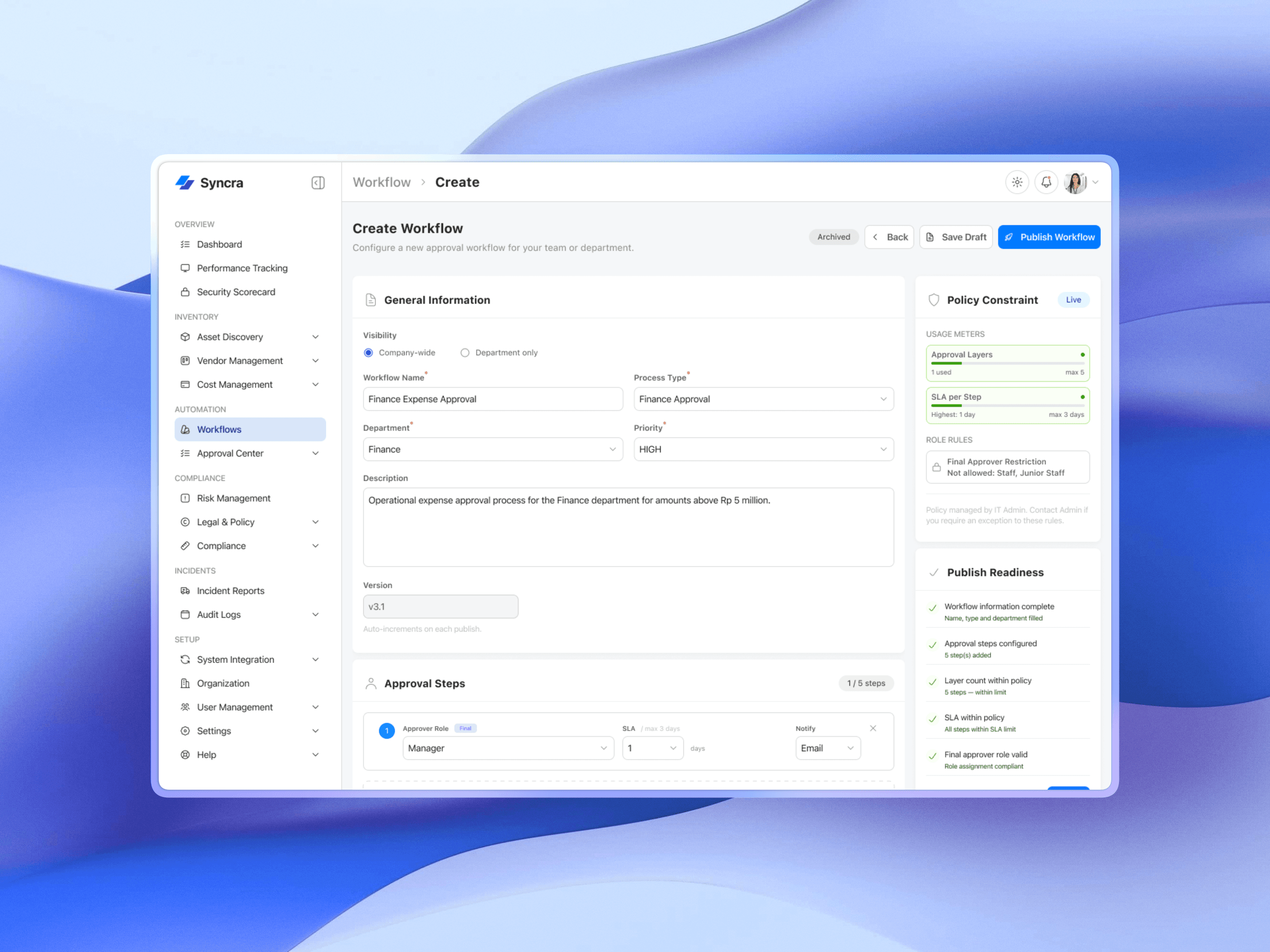
Policy validation was moved from the final publishing step into the workflow creation process, allowing managers to detect and resolve violations as they build the workflow.
Design decision 2
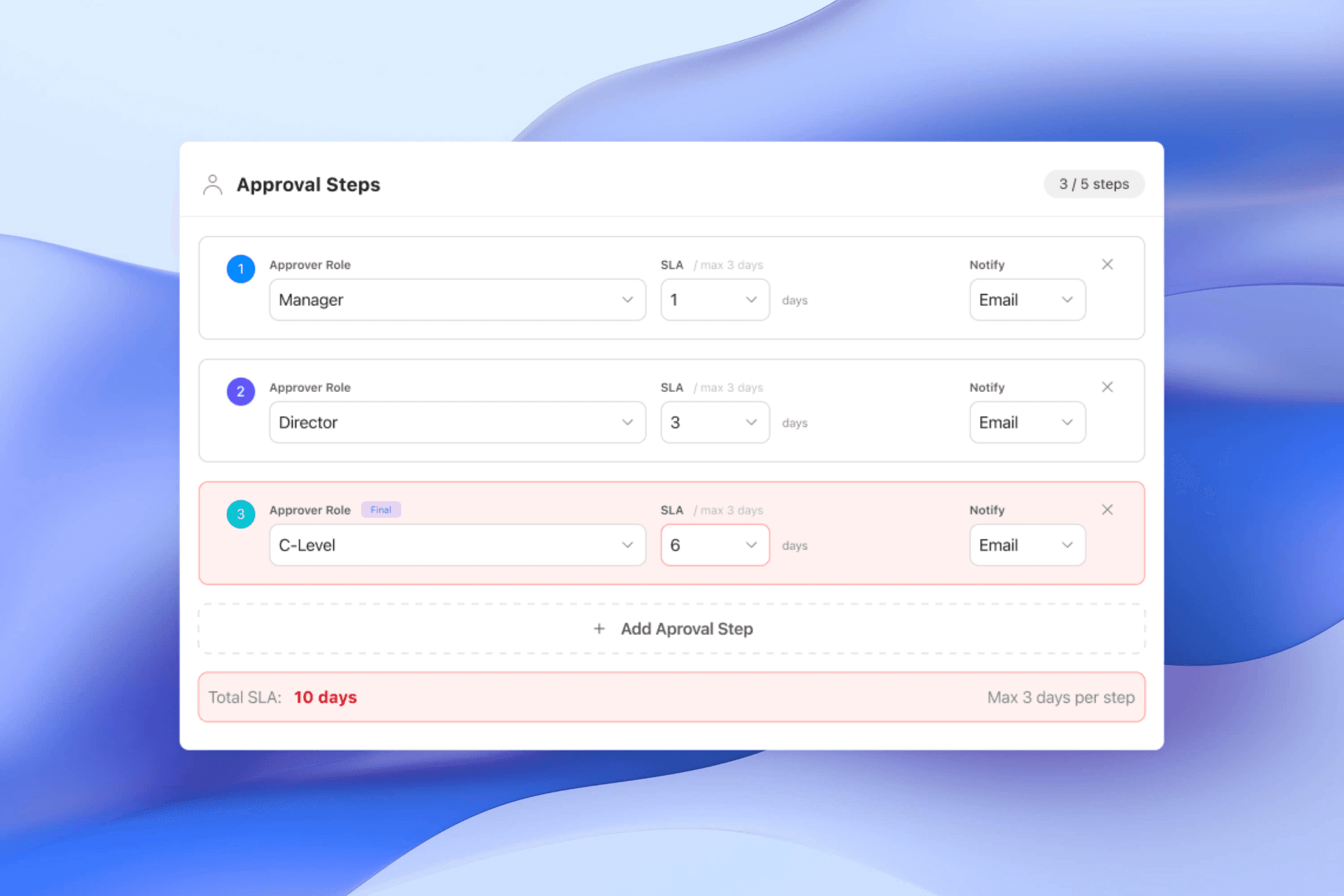
Localized & Actionable Error Feedback
Validation errors were displayed directly on the affected workflow step with clear resolution guidance, reducing confusion and preventing workflow abandonment.
DESIGN DECISION 3
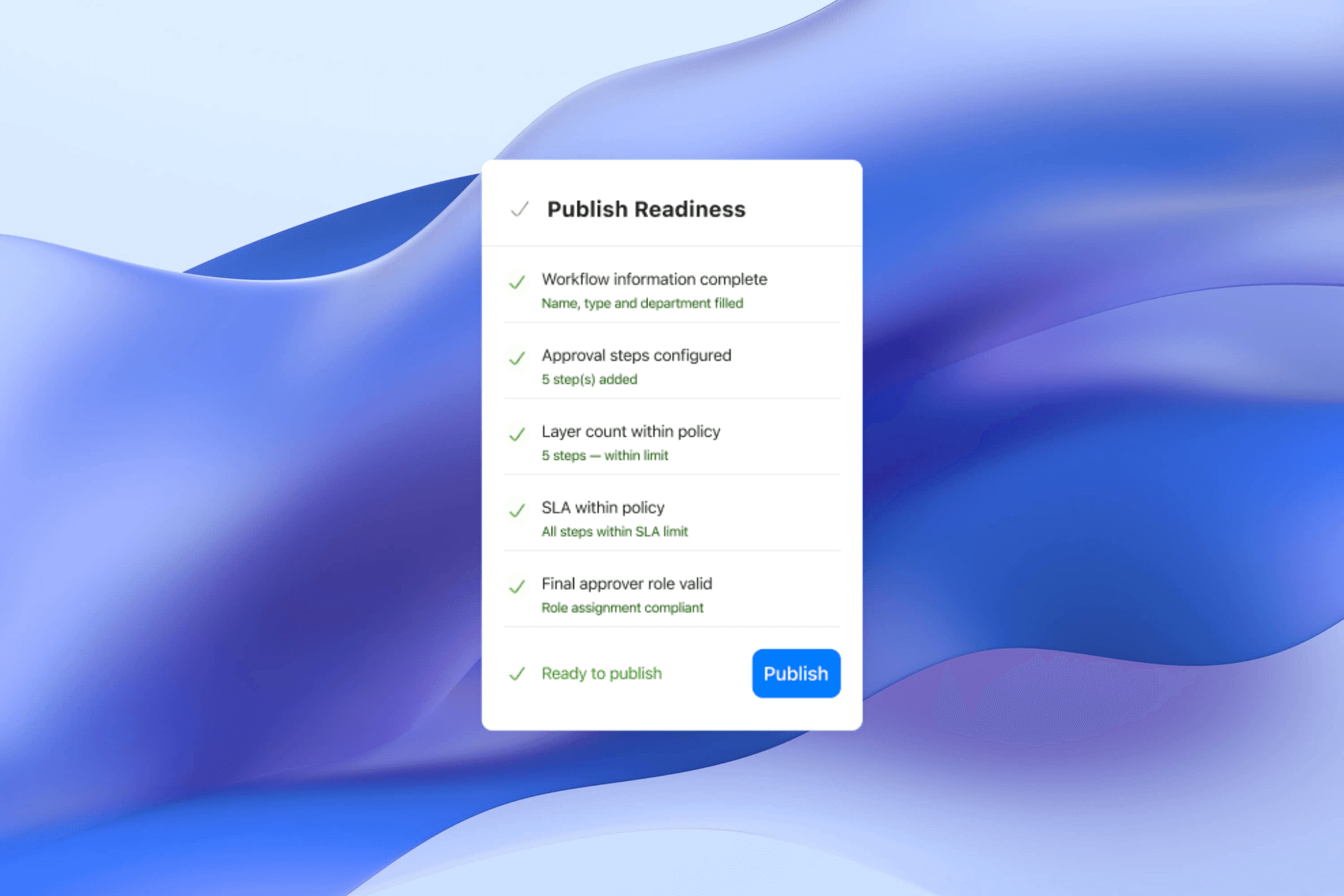
Contextual Policy Guidance
Relevant approval rules and workflow recommendations were surfaced during configuration to help managers understand constraints earlier and reduce trial-and-error setup.
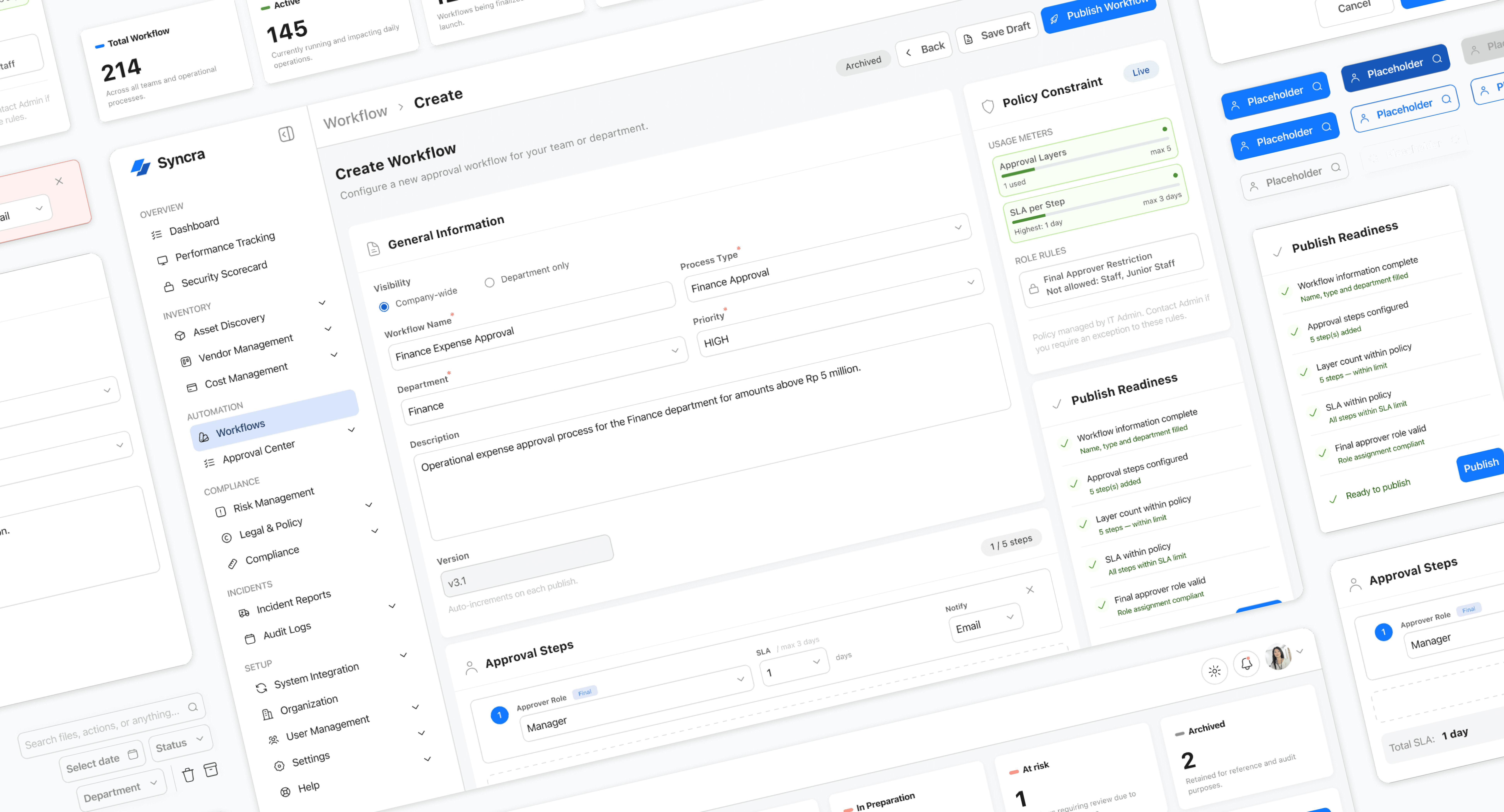
Expected outcomes
Zero publishing errors due to policy gaps.
Faster workflow deployment.
Higher completion rates in setup.
EXPECTED impact
Elimination of repetitive administrative rework.
Seamless policy compliance and governance.
Better operational efficiency for the organization.
reflection
I learned that timing is everything. The issue wasn't that company policies were too complex for managers; the feedback just came too late. By moving compliance checks into the actual creation step, I turned a frustrating administrative chore into a smooth, guided experience that helps managers instead of blocking them.
Syncra — Simplifying Approval Workflow Creation
Designed 3 new modules that help managers catch policy conflicts before they slow down approval workflows.
Role
UX/UI Designer
Industry
Enterprise
Type
Concept Project
Year
2026
CONTEXT
Syncra is an internal platform used to create approval workflows for processes such as expenses, procurement, and leave requests.
Before a workflow can be published, it must comply with company approval policies. However, validation only occurred at the final publishing stage, causing managers to discover errors after completing the entire workflow setup.
This created a repetitive trial-and-error experience that increased rework and reduced publishing success.
The challenge was to help managers detect policy issues earlier during workflow configuration.
understanding the workflow
Based on the challenge brief, I mapped the current workflow creation process to better understand how late-stage policy validation affected the publishing experience and contributed to repetitive workflow corrections.
Identifying the problem
Late Constraint Visibility
Managers only discover policy violations during publishing.Delayed Feedback
Validation occurs after users complete the workflow setup process.Repetitive Corrections
Users must revisit multiple workflow steps after validation fails.Workflow Abandonment
Repeated publishing failures reduce completion confidence.
Defining the Goal
The goal was to improve workflow publishing success by helping managers detect policy issues earlier during workflow configuration.
Instead of relying on validation only at the final publishing stage, the experience needed to provide clearer guidance throughout the workflow creation process — reducing repetitive corrections and improving publishing confidence.
Exploring the Solution
Ideas
To reduce late-stage publishing failures, I explored different ways to integrate policy validation directly into the workflow creation process.
Information Architecture
I also structured an architecture embeds validation checkpoints throughout the workflow setup process. This structure allows the to evaluate constraints progressively as managers configure approval steps.
Wireframe
Several interaction approaches were explored to determine how policy constraints could be integrated into the workflow creation process. The sketches focused on testing different ways to:
Display validation feedback during configuration
Guide managers through compliant approval structures
Minimize interruptions while building workflows
Design Decision 1
Progressive Validation During Configuration
Policy validation was moved from the final publishing step into the workflow creation process, allowing managers to detect and resolve violations as they build the workflow.
Design decision 2
Localized & Actionable Error Feedback
Validation errors were displayed directly on the affected workflow step with clear resolution guidance, reducing confusion and preventing workflow abandonment.
DESIGN DECISION 3
Contextual Policy Guidance
Relevant approval rules and workflow recommendations were surfaced during configuration to help managers understand constraints earlier and reduce trial-and-error setup.
Expected outcomes
Zero publishing errors due to policy gaps.
Faster workflow deployment.
Higher completion rates in setup.
EXPECTED impact
Elimination of repetitive administrative rework.
Seamless policy compliance and governance.
Better operational efficiency for the organization.
reflection
I learned that timing is everything. The issue wasn't that company policies were too complex for managers; the feedback just came too late. By moving compliance checks into the actual creation step, I turned a frustrating administrative chore into a smooth, guided experience that helps managers instead of blocking them.